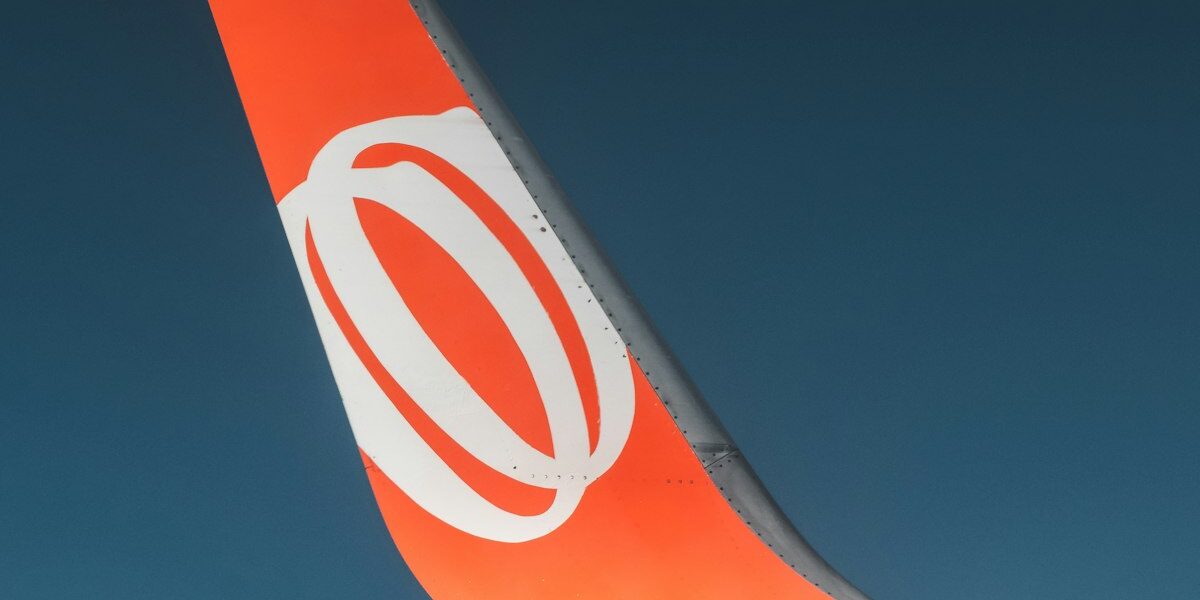
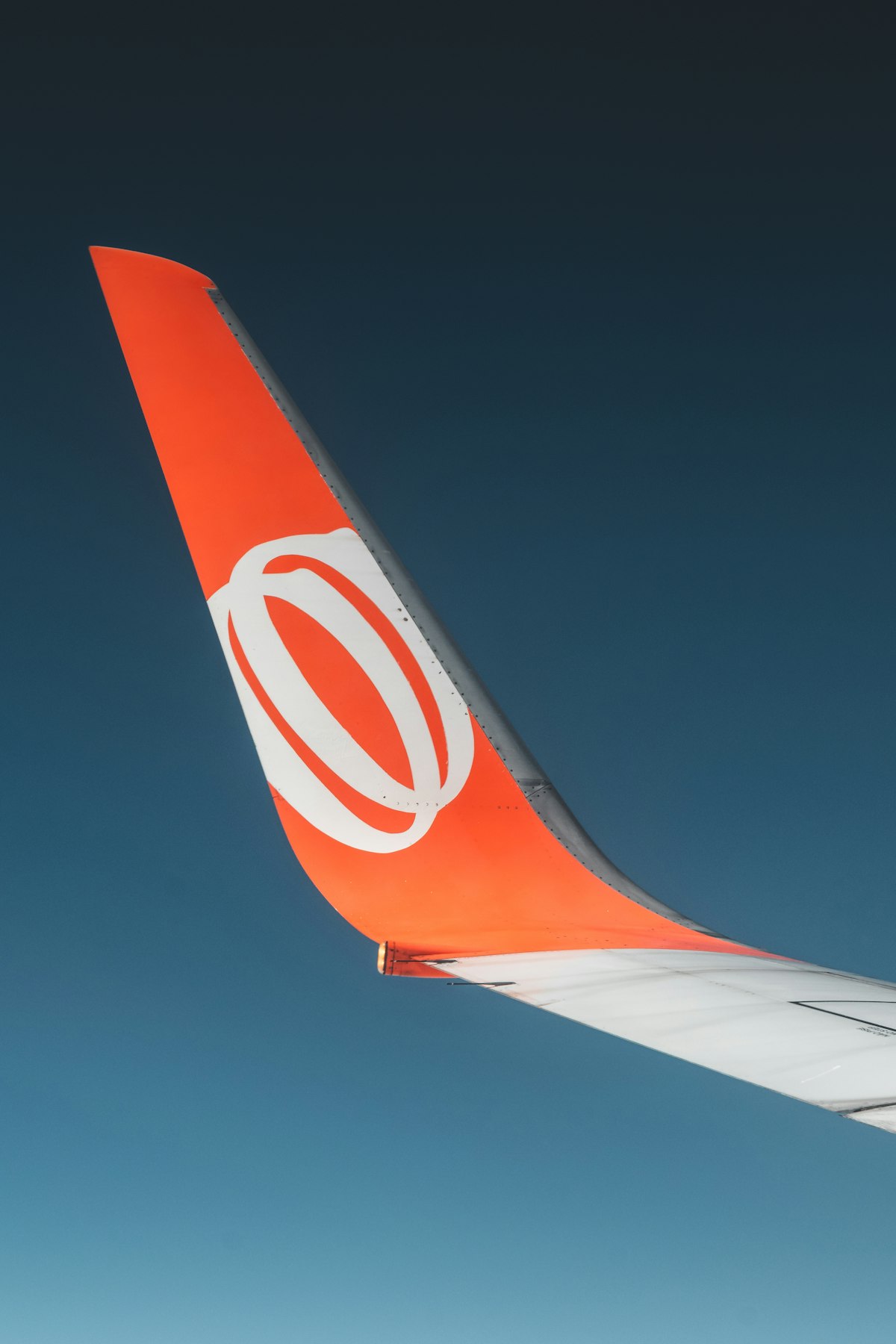
Those distinctive upturned tips you see on modern aircraft wings aren’t just aesthetic flourishes – they’re precision-engineered devices that save the airline industry over $2 billion annually in fuel costs. Called winglets, blended winglets, or split-tip winglets depending on their design, these aerodynamic innovations represent one of aviation’s most successful efficiency improvements.
The Physics of Wingtip Vortices
To understand why winglets work, you need to understand the problem they solve. As an aircraft wing generates lift, high-pressure air from below the wing tries to escape around the wingtip to the low-pressure area above. This creates powerful rotating vortices – miniature horizontal tornadoes that trail behind every aircraft in flight.
These wingtip vortices are more than just a curiosity. They:
- Create induced drag that the engines must overcome
- Waste fuel pushing against this self-generated resistance
- Pose hazards to following aircraft (wake turbulence)
- Account for up to 40% of total drag at cruise altitude
The Aerodynamics of Induced Drag
Induced drag deserves closer examination because it’s the specific problem winglets address. Unlike parasitic drag (from air friction against the aircraft surface) or wave drag (from shock waves near the speed of sound), induced drag is an unavoidable consequence of generating lift with a finite-span wing.
The mathematics show that induced drag is inversely proportional to wingspan squared. Doubling wingspan quarters induced drag. But wingspan is limited by airport gate width, runway requirements, and structural weight. Winglets provide effective wingspan increase without the problems of physically longer wings.
The Winglet Solution
Winglets work by blocking the airflow from escaping around the wingtip. By extending vertically (or at an angle) from the wing’s end, they act as a barrier that forces air to flow more smoothly over and under the wing rather than spilling around it.
The result is a smaller, weaker vortex and significantly reduced induced drag. Modern split-tip winglets – like those on the Boeing 737 MAX – feature both upward and downward extensions, further optimizing the airflow pattern.
Design Considerations and Trade-offs
Winglet design involves careful optimization. Larger winglets reduce more drag but add weight and structural loads to the wing. The cant angle (how much the winglet tilts outward) affects both efficiency and side loads. Height-to-chord ratios must balance aerodynamic benefit against interference effects.
Modern computational fluid dynamics enables optimization that would have been impossible when winglets first appeared. Engineers can test thousands of configurations virtually before building physical prototypes, finding designs that maximize benefit while minimizing penalties.
Measurable Savings
The fuel savings from winglets are substantial and well-documented:
- Boeing 737 MAX: Split-tip winglets contribute to 4-5% fuel savings over previous generation
- Airbus A350: Curved wingtip devices save approximately 3.5% fuel
- Boeing 787: Raked wingtips provide 5-6% improvement in fuel efficiency
- Retrofit winglets: Adding winglets to older 737s and A320s saves 3-4% fuel
For a single Boeing 737 flying typical routes, winglets save approximately 100,000 gallons of fuel per year. Multiply that across the global fleet of over 25,000 commercial jets equipped with winglets, and the savings become staggering.
The $2 Billion Calculation
Industry analysts estimate that winglets save airlines collectively over $2 billion annually:
- Average fuel savings: 4% per aircraft
- Global commercial fleet with winglets: ~25,000 aircraft
- Average annual fuel cost per aircraft: $2-3 million
- Total annual savings: $2-3 billion industry-wide
These savings go directly to airline bottom lines, making winglets one of the highest-return investments in aviation history.
Evolution of Winglet Design
Winglet technology has evolved significantly since the first commercial applications in the 1980s:
First Generation (1980s-1990s): Simple vertical fences at the wingtip. Modest efficiency gains of 2-3%.
Blended Winglets (2000s): Smooth curved transition from wing to winglet, pioneered by Aviation Partners on Boeing 737s and 757s. Improved to 4-5% savings.
Split-Tip Winglets (2010s): Dual surfaces extending both up and down from the wingtip. Used on Boeing 737 MAX with 5-6% improvement.
Sharklets/Curved Wingtips (2010s-present): Airbus’s distinctive curved design on A320neo and A350 families. Combines aesthetics with 3.5-4% fuel savings.
The Raked Wingtip Alternative
Not all manufacturers use traditional winglets. Boeing’s 787 Dreamliner features raked wingtips—an extended, swept-back wing tip without a vertical component. This approach provides similar aerodynamic benefits through a different mechanism, essentially increasing effective wingspan while maintaining structural efficiency.
The choice between winglets and raked wingtips depends on the specific aircraft design, operating conditions, and gate compatibility requirements. Neither approach is inherently superior; both represent valid solutions to the same physical problem.
Beyond Fuel Savings
Winglets provide benefits beyond just reduced fuel consumption:
- Increased range: Aircraft can fly farther on the same fuel load, opening new route possibilities
- Higher payload: Alternatively, airlines can carry more cargo or passengers on existing routes
- Reduced emissions: Less fuel burned means proportionally fewer CO2 and NOx emissions
- Lower noise: Smaller vortices mean slightly quieter operations
- Improved takeoff performance: Better climb gradients from obstacle-limited airports
The Retrofit Revolution
One of winglets’ greatest advantages is that they can be added to existing aircraft. Companies like Aviation Partners Boeing and Airbus’s own retrofit programs have equipped thousands of older aircraft with modern winglet technology.
A typical winglet retrofit costs $600,000-$900,000 per aircraft but pays for itself in fuel savings within 2-3 years. After that, every flight generates pure profit from reduced fuel burn. Southwest Airlines, which retrofitted its entire 737 fleet with winglets, estimates the program has saved the airline over $1 billion since implementation.
Future Developments
Engineers continue pushing winglet technology forward. Active winglets that adjust their angle during flight, morphing wingtips that change shape based on flight conditions, and even folding wingtips (like those on the Boeing 777X) that allow larger wingspans to fit existing airport gates are all in development or already in service.
NASA research suggests that optimized winglet designs could eventually achieve 7-8% fuel savings – meaning the best is yet to come for this remarkably effective technology.
A Simple Idea, Massive Impact
Winglets prove that sometimes the best engineering solutions are elegantly simple. A vertical extension at the wingtip – an idea that seems obvious in retrospect – has saved the aviation industry billions of dollars and prevented millions of tons of CO2 emissions. As airlines face pressure to reduce their environmental impact while controlling costs, winglets remain one of the most effective tools in their arsenal.


Stay in the loop
Get the latest flighttechtrends updates delivered to your inbox.