
The human eye is remarkably capable, but it has limitations – limitations that become dangerous when you’re flying an aircraft at 150 knots toward a runway you cannot see. Enhanced Vision Systems (EVS) and Synthetic Vision Systems (SVS) give pilots the ability to see through darkness, fog, and precipitation, effectively granting them superhuman vision when they need it most.
Understanding the Technologies
Though often mentioned together, EVS and SVS work in fundamentally different ways:

Enhanced Vision Systems (EVS) use onboard sensors to see the real world in ways human eyes cannot. Infrared cameras detect heat signatures – runway lights, vehicle traffic, even the thermal contrast between concrete and grass. Millimeter-wave radar penetrates fog and rain that would blind optical sensors.
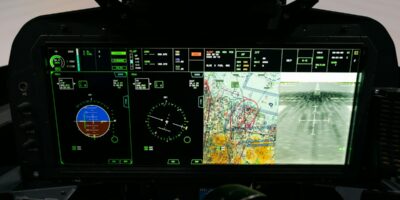
Synthetic Vision Systems (SVS) create a computer-generated view of the outside world using terrain databases, GPS position, and aircraft attitude data. The display shows what you would see if the weather were perfectly clear – mountains, airports, obstacles – all rendered in real-time 3D graphics.
Modern systems combine both: EVS shows what’s actually there right now, while SVS provides context about the terrain and environment.
The Physics Behind Enhanced Vision
Understanding why EVS works requires understanding electromagnetic radiation. Visible light represents only a tiny portion of the electromagnetic spectrum. Objects emit and reflect energy across a much broader range, including infrared wavelengths that human eyes cannot detect but EVS sensors can.
Thermal infrared sensors detect heat radiation. Warm objects—runway lights, aircraft engines, even body heat from wildlife on the runway—stand out clearly against cooler backgrounds. This works regardless of ambient light, making night operations as visible as daylight.
Near-infrared sensors operate closer to visible light wavelengths. They’re particularly effective at penetrating haze and light fog, revealing objects that would be invisible to the naked eye. Different sensor types complement each other, providing comprehensive vision across varying conditions.
Seeing Through the Invisible
Consider a typical low-visibility approach scenario. The aircraft is descending toward an airport shrouded in fog. With the naked eye, the pilots see nothing but gray mist. But with EVS/SVS:
- The SVS display shows a 3D representation of the terrain, clearly depicting any mountains or obstacles
- The runway appears as a distinct rectangle at the correct position and angle
- EVS overlays the actual runway lights, visible through the fog via infrared imaging
- Traffic and other aircraft appear as highlighted symbols
- The flight path vector shows exactly where the aircraft will touch down
This combination of real and synthetic information creates situational awareness that exceeds what a pilot would have even in clear weather.
The Technology Behind EVS
Modern EVS systems use multiple sensor types, each with specific capabilities:
Infrared Cameras: Short-wave and long-wave infrared sensors detect temperature differences. Runway lights (hot) contrast sharply with the cold tarmac. Even without lights, the runway’s thermal signature differs from surrounding grass and dirt.
Millimeter-Wave Radar: Operating at frequencies around 77 GHz, these radar systems can penetrate fog, rain, and snow that would blind optical and infrared sensors. They’re particularly effective at detecting runway surfaces and other aircraft.
Multi-Spectral Sensors: The latest systems combine multiple sensor types with sophisticated image fusion algorithms, selecting the best data from each sensor for current conditions.
SVS: A Database-Driven View
Synthetic vision draws from extensive databases:
- Terrain data: Detailed elevation models showing every hill, mountain, and valley
- Obstacle databases: Towers, antennas, power lines, and other hazards
- Airport layouts: Runway positions, taxiways, buildings, and approach lighting
- Navigation data: Airways, approach procedures, and restricted airspace
The system uses GPS and inertial navigation to determine the aircraft’s precise position and attitude, then renders the appropriate view from the pilot’s perspective. The result is a video-game-like display that shows exactly what’s outside, even when nothing is visible through the windshield.
Database Integrity and Updates
SVS accuracy depends entirely on database quality. Terrain data comes from surveys, satellite imagery, and radar mapping. Obstacle databases require continuous updating as new towers are built and old structures are removed. Airport layouts change with construction projects.
Airlines and operators maintain subscription services that provide regular database updates. Using outdated databases creates obvious hazards—the system might show clear terrain where a new tower now stands. Regulatory requirements mandate database currency, with expiration dates built into the systems.
Regulatory Recognition
The FAA and EASA have progressively granted operational credits to aircraft equipped with EVS/SVS:
- Enhanced Flight Vision Systems (EFVS): Allow pilots to descend below standard minimums using EVS imagery
- EFVS to touchdown: Certain approved systems allow landing entirely by EVS reference, without ever seeing the runway visually
- SVS operational credits: Enhanced situational awareness justifies reduced separation requirements in some scenarios
These credits translate directly to fewer delays, cancellations, and diversions – significant economic benefits for airlines operating in challenging weather environments.
Implementation Across the Fleet
EVS and SVS are now standard or optional on most new commercial aircraft:
- Boeing 787 and 777X: HUD-integrated EVS with multi-spectral sensors
- Airbus A350: Optional EVS with infrared and millimeter-wave capability
- Business jets: Gulfstream, Bombardier, and Dassault offer integrated EVS/SVS as standard on premium models
- General aviation: Garmin’s SVT (Synthetic Vision Technology) has made SVS accessible to small aircraft owners
The Combined Vision Future
The next generation of vision systems will blur the line between EVS and SVS entirely. Combined Vision Systems (CVS) overlay real sensor imagery onto synthetic terrain, with artificial intelligence highlighting the most important features.
Prototype systems can identify and highlight runway numbers, taxiway signs, and even wildlife on the runway – information that would be invisible to the naked eye at night or in reduced visibility. Augmented reality headsets may eventually replace fixed HUD combiners, giving each pilot a customized, head-tracked view.
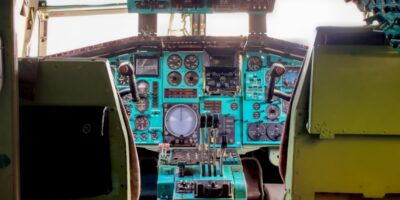
For now, EVS and SVS represent one of aviation’s most significant safety advances. Pilots who fly equipped aircraft often report that returning to “steam gauge” cockpits feels like going blind. Once you’ve experienced superhuman vision, regular human vision seems inadequate for the task of flying.


Stay in the loop
Get the latest flighttechtrends updates delivered to your inbox.