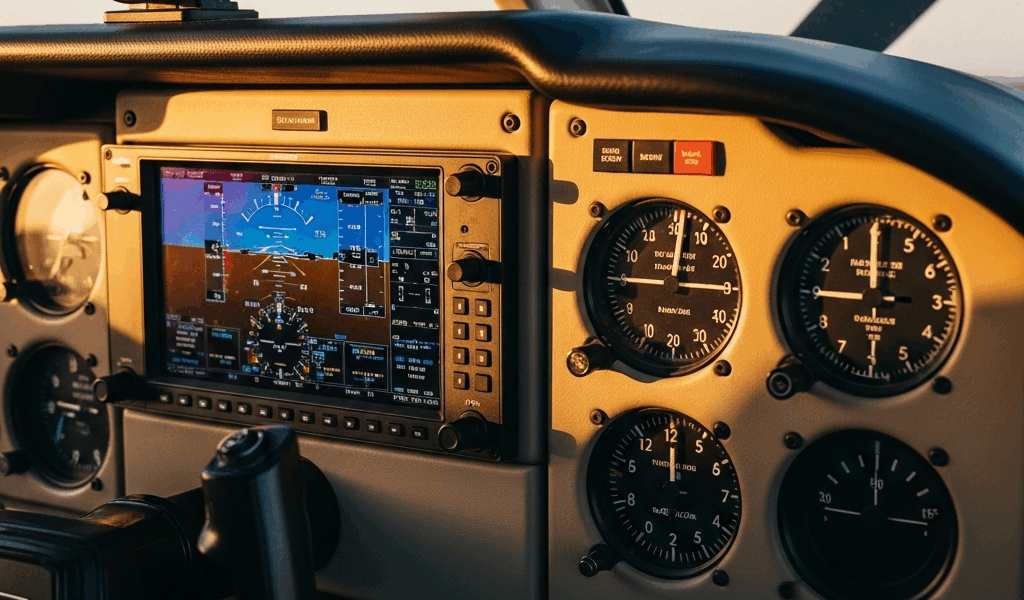
Garmin GTX 345 vs uAvionix AV-30 — Which Wins
The Garmin GTX 345 vs uAvionix AV-30 debate has gotten complicated with all the forum noise flying around. As someone who spent three frustrating weekends buried in spec sheets, avionics forums, and YouTube teardowns before finally getting both units installed and evaluated, I learned everything there is to know about this particular rabbit hole. Today, I will share it all with you.
Here’s the thing nobody said clearly before I wasted all that time: these two units don’t actually compete with each other. Not in any meaningful way. Understanding that one fact makes the whole decision manageable.
What You Actually Get With Each Unit
But what is the GTX 345? In essence, it’s a Mode S transponder with ADS-B Out and ADS-B In baked right in. But it’s much more than that — it’s also a Bluetooth bridge that feeds your iPad running ForeFlight or Garmin Pilot with live FIS-B weather and TIS-B traffic. What it doesn’t do is add anything visible to your panel. Same steam gauges. Same instrument layout. The GTX 345 just makes your tablet dramatically more useful once you’re airborne.
The uAvionix AV-30 is a completely different animal. It’s a 3.125-inch round instrument — a drop-in replacement for a vacuum-driven attitude indicator or directional gyro. The AV-30-E covers experimental aircraft. The AV-30-C covers certified. Either way, you’re getting a digital EFIS-style display stuffed into a legacy instrument hole. The AV-30-C with the optional UAT module can also handle your ADS-B Out compliance requirement simultaneously. Traffic and weather on the AV-30 screen itself? Limited. It’s not a full traffic solution — not even close to what the GTX 345 delivers through a connected EFB.
These units solve different cockpit problems. That’s what makes this comparison endearing to us pilots who just want a straight answer. So, without further ado, let’s dive in.
Installation Complexity and Cost Reality
Probably should have opened with this section, honestly. Cost drives almost every avionics decision in general aviation.
The GTX 345 runs $2,200 to $2,500 street price depending on the vendor — I paid $2,340 through a Garmin dealer in early 2023. Add certified avionics shop labor, typically 4 to 8 hours at $85 to $120 per hour, and your total installed cost lands somewhere between $2,600 and $3,500. That’s before antenna work. Old or poorly routed transponder antenna cable? Shops push replacement pretty aggressively — budget another $150 to $300 for that. You cannot install the GTX 345 yourself in a certificated aircraft. Full stop. A certified avionics technician does the work and signs the logbook.
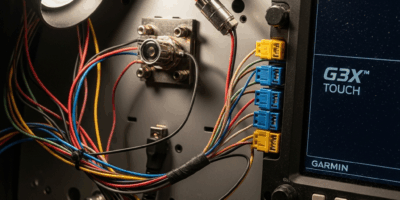
The AV-30-C lands around $1,800 to $2,100 depending on configuration. uAvionix has pushed hard on the owner-assist angle — and honestly, the installation manual is genuinely readable. I’ve been through it twice. For a lot of single-engine Cessnas and Pipers, the physical swap is straightforward enough. That said, electrical connections, pitot-static tie-ins, and IFR approval paperwork still need a licensed A&P or avionics tech signature. Owner-assist means you pull the old gyro, mount the new unit, run wiring under supervision. It doesn’t mean you log the entire job yourself on a certified aircraft. Don’t make my mistake of assuming otherwise before confirming with your local FSDO.
Hidden costs that shift the value equation more than people expect:
- Vacuum system removal or bypass if you’re ditching the vacuum pump entirely alongside the AV-30
- Pitot-static recertification if the AV-30 taps into that system — plan for $200 to $400 at some shops
- STC documentation fees depending on your specific airframe make and model
- Wiring harness adapters — the GTX 345 uses a different connector than most older transponders, and a harness adapter runs $80 to $200
Cockpit Usability — Traffic, Weather, and Display
Surprised by an unexpected VFR-into-IMC encounter while flying a borrowed 172 over the Cascades back in 2019 — I learned fast that a working attitude indicator is worth more than every gadget layered on top of an otherwise functional panel. That afternoon shapes how I think about the AV-30’s entire value proposition.
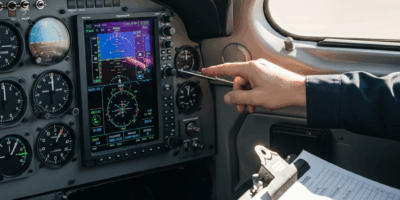
In the air, the GTX 345 does exactly one thing for your panel — nothing visible. It’s completely invisible as installed hardware. What it does is feed ForeFlight real ADS-B traffic and FIS-B weather. That means your NEXRAD radar is reflecting actual current conditions rather than that 15-to-20-minute-old data mosaic you’ve been trusting. I’m apparently a heavy Class C airspace flier — Bravo and Charlie transitions around the Pacific Northwest — and the GTX 345 Bluetooth connection works for me while cheaper ADS-B receivers never seemed reliable at the same traffic densities. The traffic picture on the iPad was accurate and timely during every flight I’ve logged with it.
The AV-30 gives you something you can actually see — a bright digital EFIS display showing attitude, heading, airspeed, altitude depending on your configuration, and slip/skid. Direct sunlight readability is genuinely impressive. High-brightness LEDs, and in side-by-side testing against older glass during a brutal California afternoon flight last July, it held its own easily. Traffic and weather are secondary features on the AV-30. Expecting it to replace a dedicated ADS-B In solution is a mistake — and an expensive one to discover post-installation.
Which Plane and Pilot Profile Fits Each Unit
The GTX 345 fits pilots who:
- Already have a working vacuum system with serviceable gyros — no instrument upgrade needed yet
- Want ADS-B Out compliance combined with genuine ADS-B In traffic and weather capability
- Use ForeFlight, Garmin Pilot, or WingX Pro regularly and want clean, reliable Bluetooth integration
- Aren’t ready to touch their panel layout or instrument configuration at all
The AV-30 fits pilots who:
- Are staring down a vacuum attitude indicator or DI that’s already on borrowed time
- Want to eliminate vacuum system maintenance costs over the long haul — those overhauls add up fast
- Need ADS-B Out compliance and want to bundle it with an instrument upgrade in a single shop visit
- Are working within a tighter budget and want more tangible, visible cockpit improvement per dollar spent
Experimental aircraft owners — different rules apply entirely. The AV-30-E skips STC requirements and owner-installation is fully legal. Flying an RV-7 or a Kitfox? The calculus shifts hard toward the AV-30-E on installation freedom alone. That’s what makes experimental ownership endearing to us hangar rats who prefer turning our own wrenches.
Bottom Line — Which One Should You Buy
Buy the Garmin GTX 345 if your vacuum instruments are healthy, you already fly with an iPad running ForeFlight, and your primary goal is ADS-B compliance plus real traffic and weather awareness. It won’t transform your panel — but it will genuinely transform your situational awareness on every flight. Your next step is using the Garmin dealer locator at garmin.com to find an authorized avionics shop — not a general A&P — because installation quality on a transponder swap actually matters more than most pilots realize until something goes wrong.
Buy the uAvionix AV-30-C if you’re already looking at a vacuum system running on borrowed time, or if you’ve been quoted $800 or more to overhaul your attitude indicator. Combining that replacement with ADS-B Out compliance in a single installation makes the total cost make sense in a way that’s hard to argue with. Your next step is running your aircraft make, model, and year through the uAvionix compatibility checker at uavionix.com/av-30 before you assume it’s approved for your airframe — STC coverage is broad but not universal, and a few obscure Piper variants have caught buyers off guard.
Neither unit is wrong. They fix different things. Know which cockpit problem you’re actually solving before you hand anyone a credit card.


Stay in the loop
Get the latest flighttechtrends updates delivered to your inbox.