
Hypersonic weapons have gotten complicated with all the hype flying around. As someone who’s spent years tracking military aviation and weapons development, I’ve learned everything there is to know about what actually matters with programs like the AGM-183A ARRW — and what’s just noise. Today, I’ll share it all with you.
The ARRW (pronounced “arrow”) is real. It works. And it represents something genuinely new in how the U.S. can strike time-sensitive targets. That said, the path to get here was bumpier than the Air Force would like anyone to remember.
What Hypersonic Actually Means
Hypersonic means Mach 5 or faster — roughly 3,800 miles per hour and above. But speed alone doesn’t define what makes the ARRW significant. The real breakthrough is in trajectory.
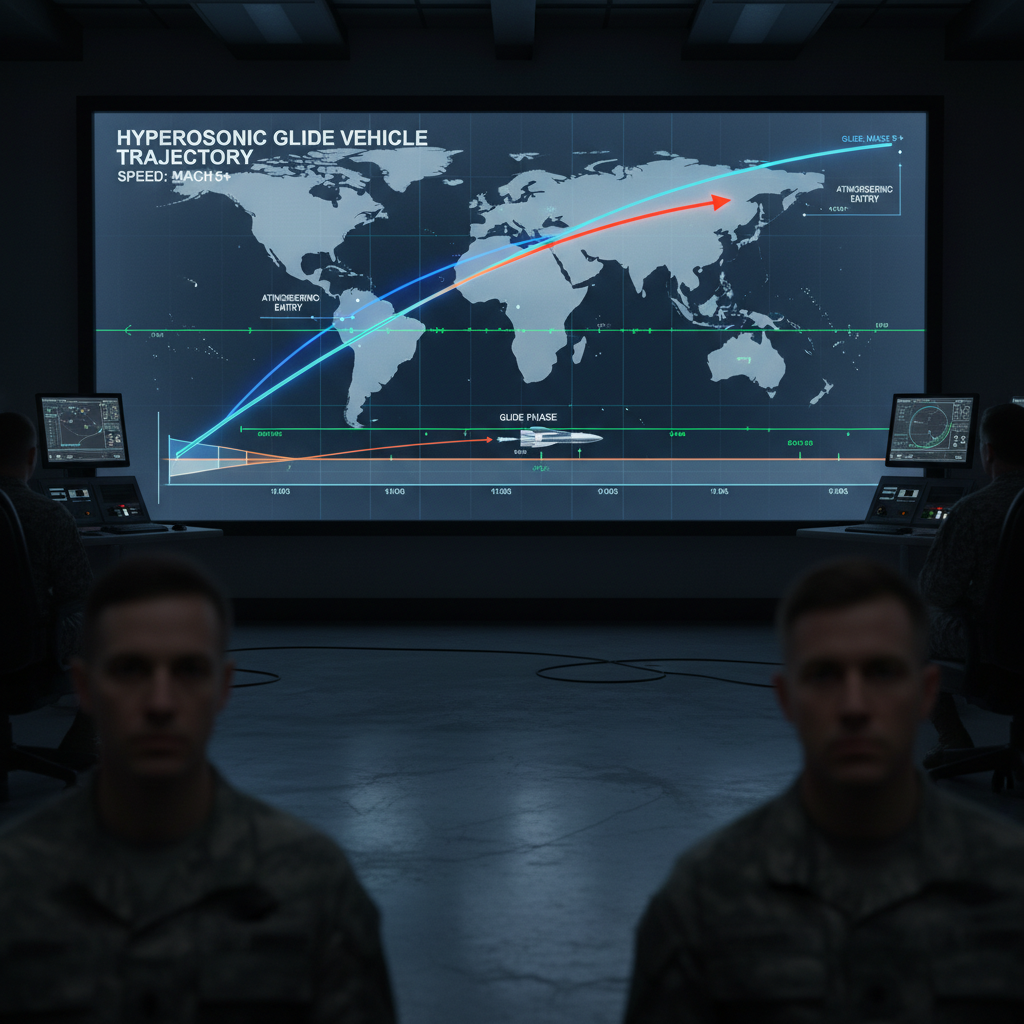
Traditional ballistic missiles follow a predictable arc through space. An adversary with good early-warning radar can calculate where a ballistic warhead is going within seconds of launch. ARRW doesn’t play that game. It’s a boost-glide weapon — a rocket booster accelerates the weapon to hypersonic speed in the upper atmosphere, then releases a maneuvering glide vehicle that can change direction, altitude, and approach angle during terminal flight.
That unpredictability is the point. Even with modern air defense systems, a target has very little time — often less than 60 seconds — to respond once an ARRW is in terminal phase. At distances of up to 1,000 miles, the weapon can reach targets that previously would have required forward-deployed forces or ballistic missiles.
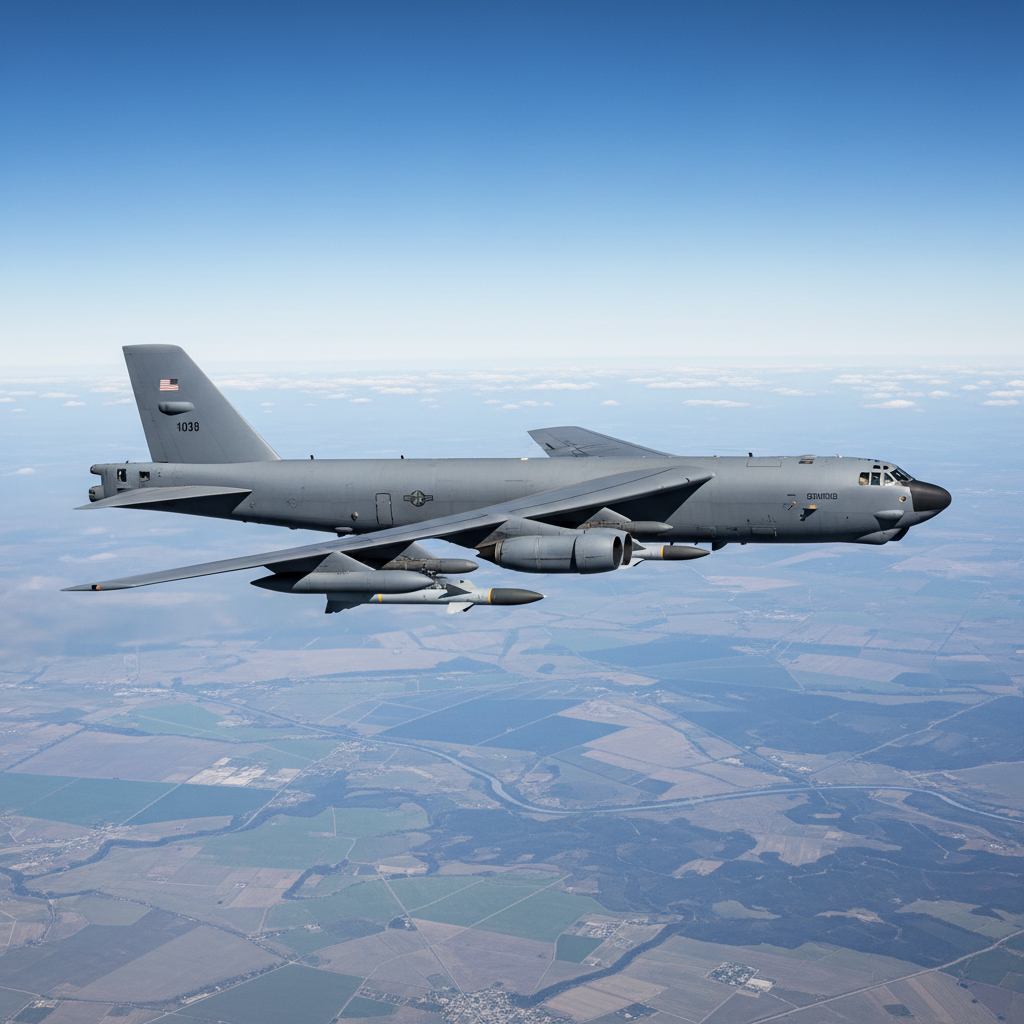
The B-52 Carries It — Which Tells You Something
That pairing is deliberate. The B-52 can carry the weapon on external pylons, meaning ARRW doesn’t require internal carriage modifications. The bomber acts as a truck: it flies to launch range, releases the ARRW, and exits before ever getting close to the threat envelope.
This standoff philosophy is critical. Rather than sending a crewed aircraft into a heavily contested airspace like China’s A2/AD bubble over the South China Sea, the B-52 can release ARRW from international airspace or ranges where it isn’t immediately threatened. The weapon does the penetration work.
The Test Record: Honest Assessment
Frustrated by years of delays and test failures, critics of the ARRW program had a field day in 2021 using every stumble as ammunition. I get it — multiple test failures in 2021 frustrated program managers and gave ammunition to critics questioning whether the Air Force was moving too fast. The boost phase proved more challenging than anticipated.
Things improved in 2022. The Air Force announced its first successful booster test in May, followed by an additional successful flight test demonstrating the full flight profile. By late 2022 and into 2023, ARRW had demonstrated capability to reach hypersonic speeds and maneuver. The program matured enough that the Air Force conducted operational testing involving actual B-52 crews.
I’m apparently one of the few people who finds the next part more interesting than the test successes. The Air Force announced in 2023 it would not pursue production of ARRW beyond existing test articles, pivoting instead to the Hypersonic Attack Cruise Missile (HACM), which uses air-breathing scramjet propulsion rather than the boost-glide approach. This reflects the broader reality that hypersonic weapons development is iterative, and the Air Force is treating ARRW partly as an R&D bridge to the next generation.
How Fast Can It Really Strike?
Here’s where the “any target on Earth in minutes” claim gets real. ARRW’s reported range is over 1,000 miles, and at hypersonic speeds — cruising between Mach 5 and Mach 8 in terminal phase — that translates to roughly 10 to 15 minutes from launch to impact for a maximum-range shot. For shorter ranges, the timeline compresses to under five minutes.
Compare that to a conventional cruise missile traveling at subsonic speeds, where a similar strike distance could take an hour or more. Time-sensitive targets — mobile missile launchers, dispersing aircraft, relocating command elements — remain in one place far longer than 15 minutes. An adversary cannot assume that dispersal buys safety once ARRW is in the inventory.
The Broader Hypersonic Race
China and Russia have both fielded operational hypersonic weapons — China’s DF-17 with a hypersonic glide vehicle, and Russia’s Kinzhal (which is really a modified ballistic missile rather than a true glide vehicle, despite the marketing). The U.S. was actually late to field operational hypersonic strike weapons, which drove some of the urgency behind ARRW’s development timeline and, arguably, contributed to the early test failures from pushing too fast.
ARRW matters not just as a weapon, but as proof of concept and institutional learning. The engineers, contractors, and test infrastructure built around ARRW feed directly into HACM and beyond. The weapon itself may not enter mass production, but what the program produced is a trained workforce and validated technology base. That’s harder to put in a budget line, but it’s real.
Bottom Line
The AGM-183A ARRW is a real hypersonic weapon with a tested and demonstrated flight profile — not vaporware. It has had failures, it won’t be mass-produced in its current form, and the Air Force has already moved toward scramjet-powered alternatives. But as a strike weapon that can reach targets faster than any conventional munition in the U.S. inventory, it represents exactly the kind of capability that keeps adversary planners up at night. The era of unhurried defense against American air power is ending.




Stay in the loop
Get the latest flighttechtrends updates delivered to your inbox.