The Two Planes You Fly Most Without Knowing It
Narrowbody aviation has gotten complicated with all the rebranding and variant noise flying around. As someone who started actually logging aircraft types after one too many miserable middle seats, I learned everything there is to know about what separates these two jets. Today, I will share it all with you.
You’ve almost certainly sat inside an Airbus A320neo or a Boeing 737 MAX in the last two years. You just called it “the plane.” Maybe your knees hurt. Maybe the person next to you seemed slightly less miserable than you expected — and you couldn’t figure out why. The answer was probably sitting in the airframe beneath your feet the whole time.
But what is a narrowbody workhorse? In essence, it’s the aircraft type that covers the overwhelming majority of short-to-medium haul routes on earth. But it’s much more than that. London to Rome. Chicago to Dallas. Sydney to Melbourne. Under five hours, not a prop plane, not a wide-body — you’re on one of these two. That’s what makes this comparison endearing to us regular passengers. So, without further ado, let’s dive in.
Cabin Width and Seat Comfort Side by Side
Frustrated by a middle seat that felt genuinely punishing on a 3.5-hour positioning flight, I started measuring things instead of just complaining. The A320neo has a fuselage interior width of roughly 155 inches. The 737 MAX sits at about 148 inches. Seven inches across the whole cabin — which shakes out to somewhere between half an inch and a full inch of extra space per seat in a standard 3-3 economy layout.
Half an inch doesn’t sound like much. It is. At hour three in 17B, that difference is the margin between your shoulder overlapping your neighbor’s and actually fitting in your own seat. A320neo middle seats typically measure around 18 inches wide. The 737 MAX middle seat usually runs 17 to 17.3 inches in standard economy — though airlines fiddle with this constantly, so your mileage will vary.
Here’s where it gets messy, and I want to be straight about it. Seat pitch — the legroom number — is set entirely by the airline, not Airbus or Boeing. Ryanair and United can both fly 737 MAXes and offer radically different amounts of knee space. The airframe sets a ceiling on how comfortable you can be. The airline decides how close to the floor to push you. Don’t make my mistake of blaming the wrong party when your knees are jammed into 32C.
Verdict: Slight but real edge to the A320neo in economy width, particularly for middle seat passengers. Aisle or window? You’ll barely notice the difference.
Noise Levels and Ride Quality at Cruise
Probably should have opened with this section, honestly. Cabin noise is the thing passengers most consistently mention when you actually ask them about their experience — not seat dimensions, not bin space. Noise.
The 737 MAX runs CFM LEAP-1B engines. The A320neo comes with either the CFM LEAP-1A or the Pratt & Whitney PW1100G — the geared turbofan that made headlines at launch for fuel efficiency and early reliability headaches in roughly equal measure. From a passenger perspective, the PW1100G-equipped A320neo tends to run quieter at cruise. Not dramatically quieter. But Flyertalk threads and aviation forums consistently describe a calmer cabin hum compared to older-generation jets, and I’d call that directionally accurate based on my own hours logged on both types.
The 737 MAX has drawn some passenger complaints about a specific high-frequency whine during certain climb and cruise power settings. Boeing addressed cabin noise treatment across MAX variants — the MAX 8, the most common one you’ll encounter, is meaningfully quieter than the 737-800 it replaced. That was a real improvement. But against the A320neo in its quietest configuration, it’s still playing catch-up slightly.
Turbulence ride quality is harder to pin on airframe alone. Route, altitude, and weather dominate. Both aircraft use fly-by-wire or enhanced flight control systems that dampen turbulence response. Neither is dramatically smoother in light chop. What passengers report anecdotally — and I’d echo this — is that the 737 MAX feels slightly firmer through bumps. Less floaty absorption, more direct response. Whether that reads as “sporty” or “uncomfortable” depends entirely on how anxious flying makes you.
Verdict: A320neo edges it on noise, especially the GTF-engined variants. Ride quality is genuinely too close to call — but nervous fliers may find the A320neo’s slightly softer feel through turbulence more reassuring, even if the physics difference is minimal.
Windows, Overhead Bins, and Cabin Feel
Neither plane will make you feel like you’re on a 787 Dreamliner. Full stop. The Dreamliner’s windows are larger, dimmable, and sit higher — window seat passengers don’t have to contort their neck to see outside. Both the A320neo and the 737 MAX use traditional oval windows with pull-down shades, roughly comparable in size. The 737 MAX windows sit slightly lower relative to average seated eye level — which some window seat passengers actually prefer during approach when you want to look straight down at the ground.
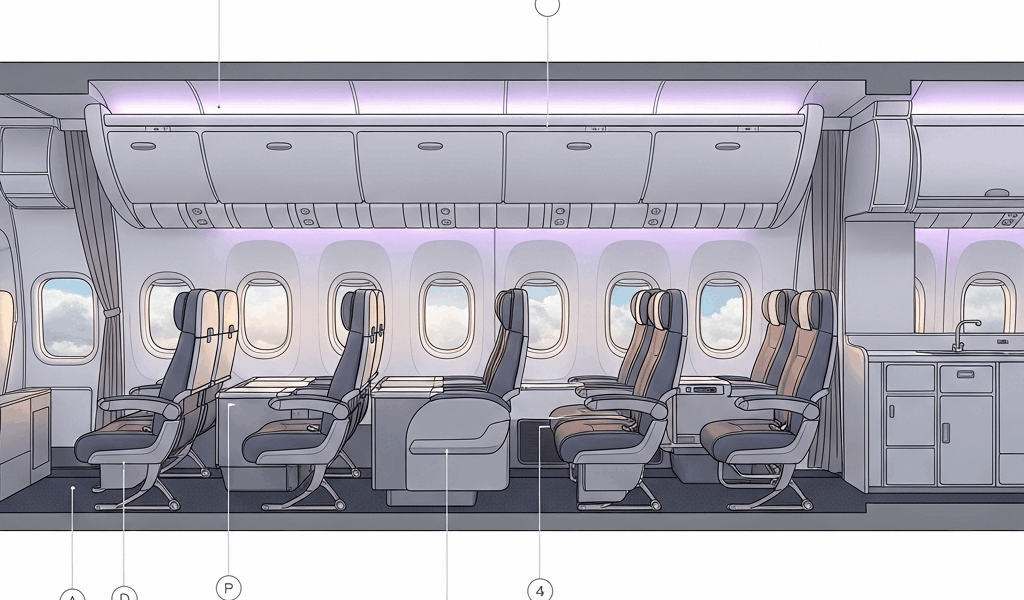
Overhead bin space matters enormously on short-haul flights where you’re not checking bags. I’m apparently a chronic carry-on overpacker and the A321neo’s Airspace bins work for me while the older-generation A320ceo bins never did. The A321neo variant specifically has been progressively updated with larger bins that accommodate full-size roller bags stored wheels-first. Genuine quality-of-life improvement. The 737 MAX has Boeing’s Space Bins on newer deliveries — similarly improved, but with more variation depending on airline configuration and retrofit status. On a busy 7 a.m. departure where everyone’s carrying on, the A321neo’s bins can genuinely feel like less of a battle.
Cabin lighting on modern deliveries of both aircraft uses LED systems with color-adjustable mood lighting. Airlines customize this heavily, so it’s hard to attribute the vibe to the airframe itself. What is consistent: both cabins feel modern compared to their predecessors. Climb aboard a 737-800 or an A320ceo right after flying a MAX or neo variant and the difference in ambient light and interior finish is striking.
Which One Should You Actually Want to Board
Here’s the honest answer, broken down by the situation you’re actually in.
- Long economy flight on a narrowbody (2–5 hours): Take the A320neo. The wider fuselage and quieter engine options make a meaningful difference when you’ve got three hours left and you’re already tired.
- Short hop under 90 minutes: It doesn’t matter. Seriously. Either plane is fine. Save your energy for something that actually affects your trip — like whether the airport has decent coffee.
- Window seat lover: Slight preference for the 737 MAX on window placement for downward views, but this is splitting hairs. Neither plane competes with a 787 on windows.
- Nervous flier: A320neo — specifically one powered by the CFM LEAP-1A or PW1100G. The quieter cabin and slightly softer feel in light turbulence will work in your favor psychologically, even if the actual physics difference is small.
- Overhead bin priority: Look for the A321neo specifically, or confirm your 737 MAX has been fitted with Space Bins. Worth five minutes of research before a busy morning departure.
Pulled up on Google Flights while booking a recent trip, I noticed the aircraft type listed directly under the flight details — small text beneath the airline name reading something like “Airbus A320neo” or “Boeing 737 MAX 8.” On mobile it’s sometimes one tap deeper under flight details. SeatGuru.com lets you pull up the exact seat map for your specific flight and aircraft configuration — genuinely useful if you care about exit row legroom or where the windows align relative to your row.
One mistake I made early on: I assumed the airline determined the experience more than the aircraft. Sometimes that’s true. But on routes where multiple carriers operate the same city pair on similar schedules, the plane type can be the deciding variable — and the margin on a 3.5-hour economy leg is real enough to be worth a few minutes before you book.
Check the aircraft. Then check the seat map. Then enjoy the flight.



Stay in the loop
Get the latest flighttechtrends updates delivered to your inbox.