
Light twin aircraft have gotten complicated with all the “just buy a single” financial advice flying around. As someone who’s spent years evaluating piston twins and talking to pilots who fly them professionally and recreationally, I’ve learned everything there is to know about why the Beechcraft Baron 55 still holds its own against anything in its class. Today, I’ll share it all with you.
The Beechcraft Baron 55 has been flying since 1961, and in that span it has outlasted most of its competitors, survived Beechcraft’s own corporate restructurings, and accumulated a reputation among twin-engine pilots that borders on devotional. It is not the fastest light twin. It is not the most fuel-efficient. What it has is a particular combination of capability, handling, and reliability that pilots who fly it tend to compare favorably to anything else in its class. Having examined the aircraft closely, I think they’re right.
What the Baron 55 Actually Is
The Baron 55 is a six-seat, piston twin originally derived from the Beechcraft Travel Air. It’s powered by two Continental IO-470 or IO-550 engines producing 260 to 300 horsepower per side. Gross weight runs around 5,100 to 5,500 pounds depending on configuration. Cruise speeds in the 190-200 knot range are achievable at altitude, with a service ceiling around 20,000 feet.
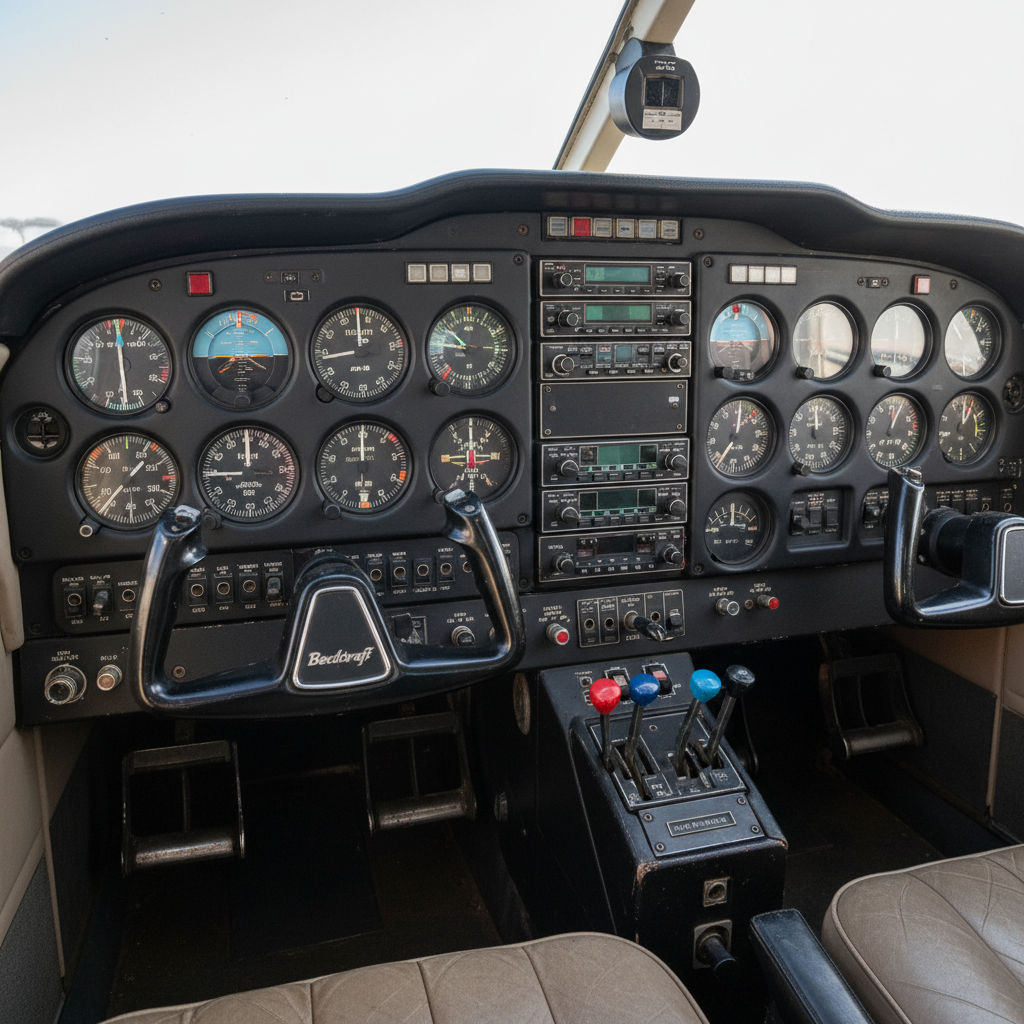
What distinguishes the Baron 55 from contemporaries — the Piper Seneca, the Cessna 310, the Piper Aztec — is partly engineering and partly Beechcraft’s manufacturing philosophy. Beechcraft built aircraft to standards that often exceeded regulatory minimums. The all-metal construction, the attention to control harmony, and the structural integrity of the airframe have contributed to an aircraft that ages well and tolerates the kind of deferred maintenance that inevitably accumulates on owner-operated aircraft over decades.
Handling: Why Pilots Love It
If you talk to Baron 55 pilots about why they prefer it over other light twins, the conversation almost always comes back to how it flies. Aileron, elevator, and rudder inputs feel proportional, responses feel predictable, and the aircraft doesn’t have the quirks that make some twin-engine aircraft feel like they’re fighting you. For pilots transitioning from single-engine aircraft, the Baron 55 has a reputation as an honest machine that will tell you what it needs rather than surprising you.
Engine-out handling is a particular selling point. The Baron 55’s Vmc is low enough that the aircraft remains manageable in the scenarios pilots actually encounter: departures, approaches, and transitions. Proper procedures actually work as advertised — which is not something you can say about every light twin.
The Used Market: Value That Holds
The Baron 55 represents one of the strongest value propositions in the used piston twin market. Aircraft from the 1970s and 1980s, properly maintained, routinely sell in the $150,000 to $300,000 range depending on engine time, avionics, and condition. That’s considerably less than new light twin aircraft — the Piper Seminole runs over $700,000 new — while offering meaningfully more capability per dollar.
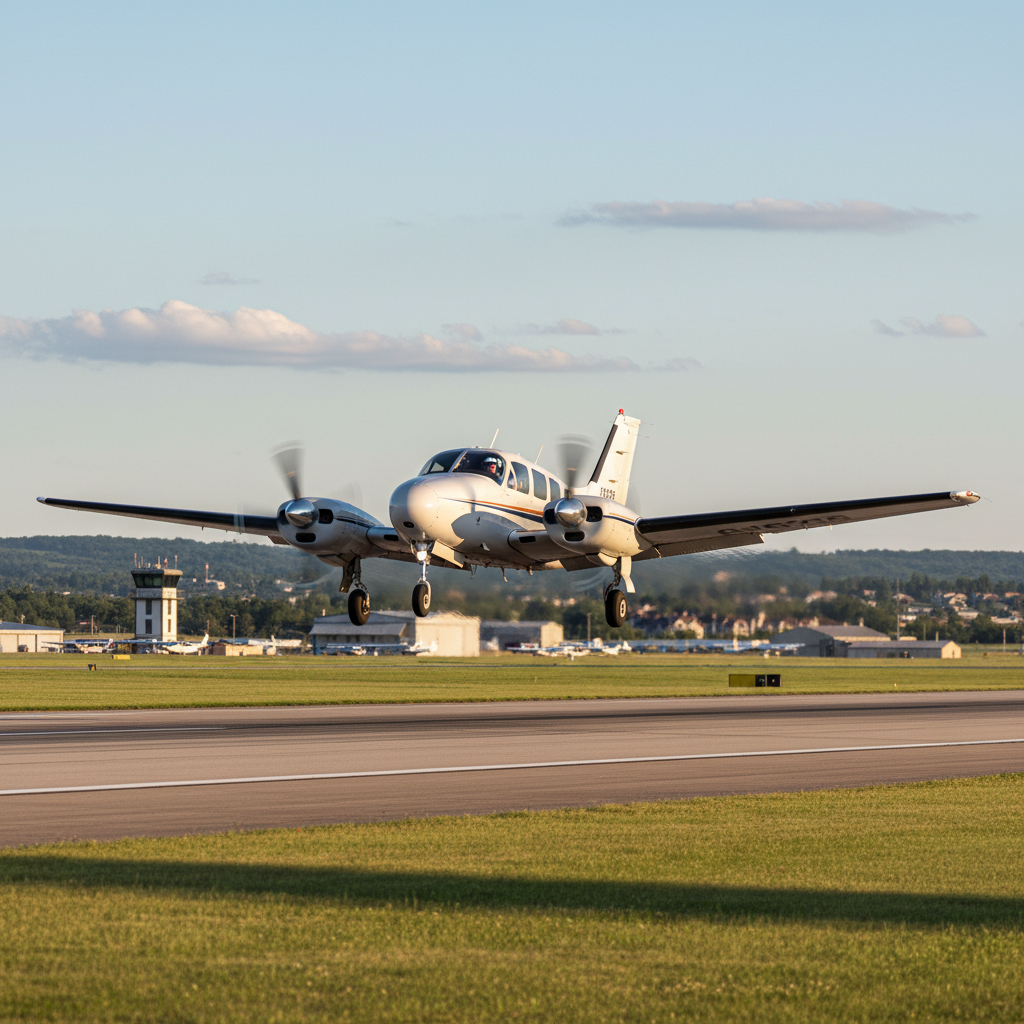
The engine situation requires attention, and I’m apparently one of the few people who leads with this caveat rather than burying it. The IO-470 and IO-550 engines have TBOs of 1,500 to 1,700 hours. Engine overhauls on twins are expensive — typically $25,000 to $40,000 per engine. This is not a hidden cost; it’s the cost of flying a piston twin. Buyers who don’t do this math often end up surprised.
Avionics and Modern Upgrades
One of the Baron 55’s advantages in the used market is that its airframe readily accepts modern avionics upgrades. The panel space is generous enough to accommodate Garmin G1000 NXi retrofits, GTN 750/650 navigators, and ADS-B-out compliant transponders without the structural modifications that make some older aircraft difficult to update. A well-upgraded Baron 55 with modern glass panel and WAAS GPS can shoot LPV approaches to 200-foot decision heights — the same approach capability as a much more expensive newer aircraft.
This upgradability is part of why Barons don’t depreciate the way other aircraft do. An owner who invests in a comprehensive avionics upgrade isn’t just improving their own utility — they’re improving the aircraft’s resale value. The combination of a well-maintained airframe and modern avionics creates a package that’s genuinely competitive with new aircraft on capability, even if not on newness.
The Bottom Line
If your mission is reliable cross-country travel at 190+ knots with five or six seats, real IFR capability, and a runway requirement compatible with smaller general aviation airports, the Baron 55 deserves to be at the top of your consideration list. It will cost more to operate than a single-engine alternative, as any twin will. But what you get in return is genuine redundancy, handling characteristics that breed confidence, and an airframe that has demonstrated 60 years of durability. That’s a combination harder to find than you’d expect at this price point.



Stay in the loop
Get the latest flighttechtrends updates delivered to your inbox.