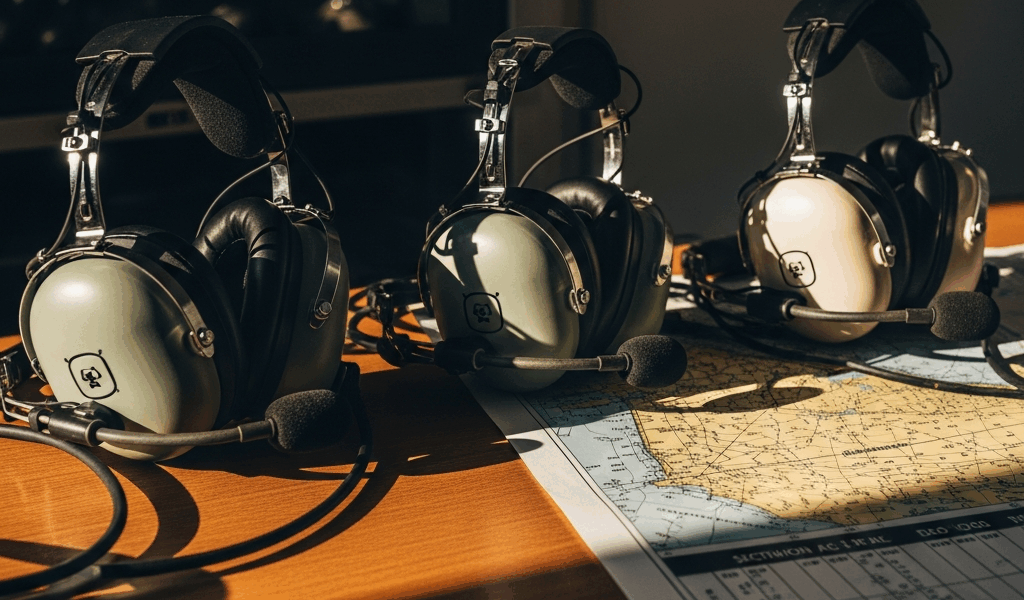
Best Aviation Headset 2026 — Bose A30 vs Lightspeed Zulu 3 vs David Clark ONE-X
Finding the best aviation headset has gotten complicated with all the sponsored “reviews” and recycled spec sheets flying around. You search for honest comparisons and end up on retailer pages with zero real-world context. Nothing about how a headset feels after hour four of a cross-country. No straight talk on whether the Bluetooth actually works or just technically exists. As someone who has flown with all three of these headsets — the Bose A30, the Lightspeed Zulu 3, and the David Clark ONE-X — across pattern work in a Cessna 172 all the way to IFR legs in a Piper Archer, I learned everything there is to know about what separates a great aviation headset from an expensive disappointment. Today, I will share it all with you.
The Big Three Aviation Headsets Compared
Before getting into each headset individually, here’s a straight comparison. All prices reflect current street pricing as of early 2026.
| Feature | Bose A30 | Lightspeed Zulu 3 | David Clark ONE-X |
|---|---|---|---|
| Weight | 340g (12 oz) | 397g (14 oz) | 368g (13 oz) |
| ANR Quality | Excellent | Excellent | Good |
| Battery Life | 45 hours | 50 hours | 40 hours |
| Bluetooth | Yes (dual) | Yes (dual) | Yes (single) |
| Street Price | ~$1,195 | ~$849 | ~$699 |
| Comfort Rating | 5/5 | 4/5 | 3.5/5 |
Nearly $500 separates the Bose from the David Clark. That’s real money — rent money, avgas money, instrument approach money. Whether that gap matters depends entirely on what kind of flying you do and how much of it you log each month.
Bose A30 — The New Standard
Surprised by how dramatically lighter the A30 felt against my old ProFlight Series 2, I switched permanently after a single demo flight at Sun ‘n Fun 2025. Genuinely did not expect to write that sentence. I walked into the Bose booth skeptical and walked out holding a receipt.
340 grams. That number doesn’t hit you until you’re three hours into a flight and realize you’ve forgotten the headset is even on your head. The ear seals are soft — actually soft, not “soft by aviation headset standards” soft. Clamping force is low enough that I wore it through a six-hour day during a cross-country through Georgia and Tennessee without any of the jaw fatigue or temple squeeze my older, heavier sets used to deliver like clockwork.
ANR performance here is outstanding. Bose built a new adaptive algorithm into the A30 — it adjusts to shifting noise environments in real time. Prop runup sounds different from cruise at 8,500 feet, which sounds different from descent with a reduced power setting. The system accounts for that. Low-frequency engine vibration gets reduced significantly, which most reviews gloss over entirely. That’s the noise that actually wears you out on long flights.
Dual Bluetooth means pairing a phone and an iPad simultaneously — no choosing. ATC audio cuts through cleanly without digging through menus mid-flight. I run a ForeFlight-connected iPad in the cockpit and the integration works exactly as advertised. No fussing.
The honest downside — and probably should have opened with this section, honestly — is $1,195. Some dealers move it for $1,149 if you hunt around. That’s a significant number. For a private pilot logging 50 hours a year on a tight budget, the math is hard. For anyone flying 150-plus hours annually or grinding through long IFR trips regularly, the comfort premium pays itself back in reduced fatigue on every single flight.
- Best for — high-hour pilots, long cross-countries, anyone who puts comfort above everything else
- Not ideal for — student pilots or anyone flying fewer than 75 hours a year who can’t absorb that price tag
Lightspeed Zulu 3 — Best Value Premium
Probably should have started here, honestly. The Zulu 3 is what I’d point most pilots toward — and I flew with one for eight solid months before the A30 entered the picture. So, without further ado, let’s dive in.
But what is the Zulu 3, really? In essence, it’s a near-premium ANR headset at a mid-tier price. But it’s much more than that — it’s the option that makes the Bose conversation genuinely complicated.
At 397 grams it’s heavier than the A30. You notice it on longer flights, not immediately. The ear seals use Lightspeed’s gel-foam combination — holds up well in summer heat, which matters if you’re flying anywhere with a genuinely brutal ramp environment. I’m apparently rough on gear and Lightspeed works for me while my old passive David Clark headset never survived a southern summer without seal degradation. Don’t make my mistake with the Zulu 3 storage, though — I left mine in a hot car one August and the gel started deforming slightly at the edges. Not a dealbreaker, but worth knowing before you do the same thing.
ANR quality trades blows with the Bose in most real-world conditions. Sitting in cruise at 9,500 feet in a 172, I ran blind comparisons between both headsets on the same flight. The gap was smaller than I expected. The Zulu 3 holds its own right up until very low-frequency noise becomes the dominant problem — that’s where the Bose pulls ahead. In a typical piston single, most pilots honestly won’t notice the difference reliably.
Battery life is rated at 50 hours — leads all three headsets here. I’ve never come close to draining it mid-flight, but knowing it outlasts the competition is genuinely reassuring on multi-day trips when you forget to plug in overnight at some random FBO.
Dual Bluetooth works cleanly. The Lightspeed app gives you EQ control and audio mixing, useful when piping in weather audio alongside ATC. Build quality feels robust — slightly industrial compared to the A30’s consumer polish, which isn’t a criticism. Aviation gear should feel like it survives abuse. That’s what makes the Zulu 3 endearing to us value-conscious pilots.
Street price around $849. That’s $346 less than the Bose A30. For most pilots, that gap is the entire conversation.
- Best for — pilots wanting near-Bose ANR performance without the Bose price tag
- Not ideal for — pilots with very small heads (the fit runs wide) or anyone prioritizing absolute minimum weight
David Clark ONE-X — The Reliable Choice
David Clark has been making aviation headsets since before most pilots reading this were born. That was 1941. The ONE-X is their ANR entry — carrying all the institutional credibility that eight decades of cockpit presence buys you.
Frustrated by the premium pricing that dominated the ANR market, David Clark engineers developed the ONE-X using decades of passive headset feedback from real pilots flying real training environments. This new approach took off within the flight training community and eventually evolved into the go-to recommendation flight instructors know and trust today.
Weight lands at 368 grams. Comfort is serviceable — not exceptional. The ear seals are firmer than both competitors and clamping force runs higher. Around the two-hour mark I start noticing it. For training flights typically running 1.0 to 1.5 hours, that’s a complete non-issue. For a six-hour day through multiple time zones, I’d reach for something else.
ANR performance is good. Not Bose-level, not Zulu 3-level — but meaningfully better than any passive headset and genuinely adequate for everyday flying. Background roar in a Cessna gets tamed effectively. In turboprops or louder aircraft the noise reduction won’t impress as dramatically, but for the typical piston training fleet, it handles the job without complaint.
Bluetooth is single-device only. Real limitation if you run a phone and a tablet simultaneously — but for a student pilot flying VFR with one phone, it covers the use case cleanly. While you won’t need dual-device connectivity at that stage, you will need solid, dependable audio performance. The ONE-X delivers that.
Battery life rates at 40 hours — lowest of the three, still practically unlimited for most flying schedules. Reliability is the ONE-X’s core argument. David Clark’s customer service and warranty support is widely regarded as best-in-class. That matters when a headset is actual operational equipment, not a gadget.
Roughly $699 street price. For a flight school, for a student building hours toward a private certificate, for a renter pilot who won’t tie up $1,200 in gear that lives in someone else’s airplane — this is the answer.
- Best for — student pilots, flight training environments, pilots flying shorter legs on a tighter budget
- Not ideal for — long IFR flights or pilots with comfort sensitivity past the two-hour mark
Which One Should You Buy
First, you should honestly assess how many hours you fly per year — at least if you want the price math to work in your favor. The Bose A30 might be the best option if you fly regularly and prioritize comfort above all else, as aviation fatigue requires every advantage you can get. That is because a headset that disappears after hour one versus one you’re fighting at hour three is a genuine safety and performance difference over a flying career.
The Lightspeed Zulu 3 is where most pilots land — near-premium ANR, dual Bluetooth, $346 less than the Bose. Hard to argue with that combination. The David Clark ONE-X is the right answer for training environments, student pilots, and anyone who wants something bulletproof backed by a brand with the longest track record in the room.
None of these is a bad headset. They’re built for different pilots at different stages of the same journey. Know which pilot you are before pulling the trigger.


Stay in the loop
Get the latest flighttechtrends updates delivered to your inbox.