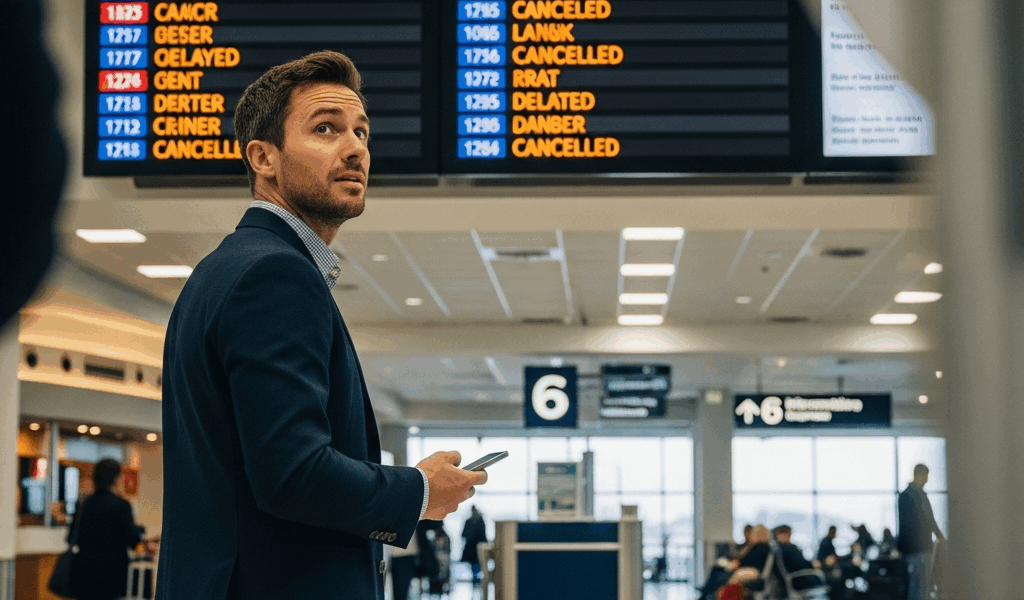
Your flight was delayed four hours, you missed your connection, and you spent the night in an airport hotel eating vending machine dinner. The airline offered a $10 food voucher. There might be money on the table — and a growing number of companies will pursue it for you, taking a cut only if they win. The question is which ones actually deliver results.
How Flight Delay Compensation Works
EU Regulation 261/2004 requires airlines to pay passengers 250 to 600 euros for qualifying delays, cancellations, and denied boardings on flights departing from or arriving in EU airports (on EU carriers). Similar protections exist in the UK, Canada, Brazil, and Turkey. The U.S. has no equivalent federal compensation requirement for delays — only for involuntary denied boarding.
Most passengers never file claims. Airlines count on this. The claims process is intentionally bureaucratic, responses are slow, and initial denials are common even for valid claims. Compensation services exist because the gap between what passengers are owed and what they actually collect is enormous.
AirHelp: Largest Database, Highest Volume
AirHelp processes more claims than any other compensation service. Their flight database covers disruptions going back years, so they can check eligibility almost instantly. The success fee is 35 percent of the compensation — if they recover 600 euros for you, they keep 210 and you receive 390. If they fail, you pay nothing.
Strengths: fast eligibility check, handles the entire process including legal escalation, supports claims for flights up to 3 years old in most EU jurisdictions. Weaknesses: the 35 percent fee is on the higher end of the market, and some users report slow communication during the legal phase when airlines contest claims. For straightforward delays with clear airline responsibility, AirHelp is reliable. For complex cases, the timeline can stretch to months.
Flightright: European Market Leader
Flightright operates primarily in European markets and has been processing claims since 2010. Their fee structure runs 20 to 30 percent depending on the jurisdiction and whether legal action is required. Lower base fee than AirHelp, but the legal escalation surcharge narrows the gap on contested claims.
Flightright’s advantage is their European legal network — they maintain relationships with courts in multiple EU jurisdictions and know which courts process claims fastest. German and Austrian claims move quickly through their pipeline. Passengers flying primarily on European routes may see better results and faster resolution with Flightright than with AirHelp, though both services ultimately get to the same outcome on valid claims.
ClaimCompass: Lowest Fee Option
ClaimCompass charges 25 percent with no additional legal fees, making it the lowest-cost option for passengers who want to keep more of their compensation. The trade-off: their coverage is primarily EU flights, and their team is smaller than AirHelp or Flightright, which can mean slower processing on complex cases.
For passengers with clear-cut claims — a delay over 3 hours on a major EU carrier with no extraordinary circumstances — ClaimCompass delivers the same result at a lower cost. For complex multi-leg itineraries or claims involving non-EU carriers, the larger services have more legal muscle.
When to File Yourself Instead
If your claim is straightforward and you do not mind spending 30 minutes on it, filing directly with the airline costs you nothing. Airlines are required to process valid claims — they just make it inconvenient. Write a concise email citing EU 261/2004, include your flight number, date, booking reference, and the length of delay. Many airlines have online claim forms. If the airline denies or ignores you, then escalate to a compensation service with legal resources.
The compensation services earn their fee on contested claims — when the airline denies responsibility, stops responding, or cites extraordinary circumstances as a defense. That legal pursuit is where the 25 to 35 percent fee delivers value you cannot replicate yourself without hiring a lawyer.




Stay in the loop
Get the latest flighttechtrends updates delivered to your inbox.