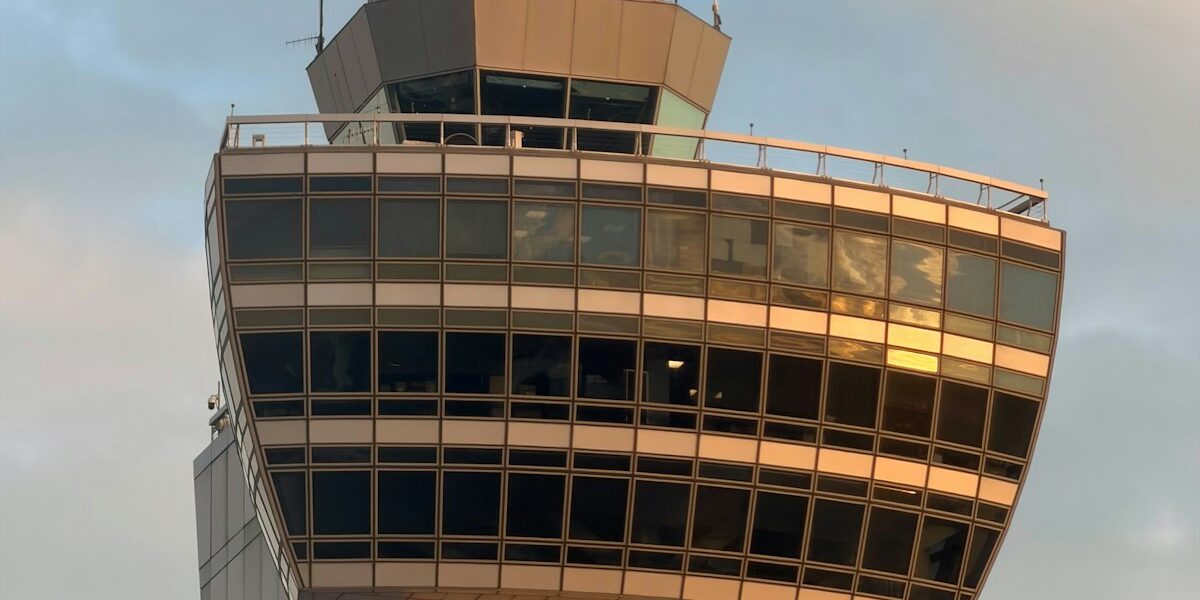
For decades, the rhythm of air traffic control was defined by radio chatter – pilots and controllers speaking in clipped, precise phrases over crackling frequencies. But a quiet revolution has transformed cockpit communications. Controller-Pilot Data Link Communications (CPDLC) is replacing voice with text, and the change is making flying safer and more efficient than ever before.
The Problem with Voice Communications
Traditional voice radio communication served aviation well for decades, but it has significant limitations:
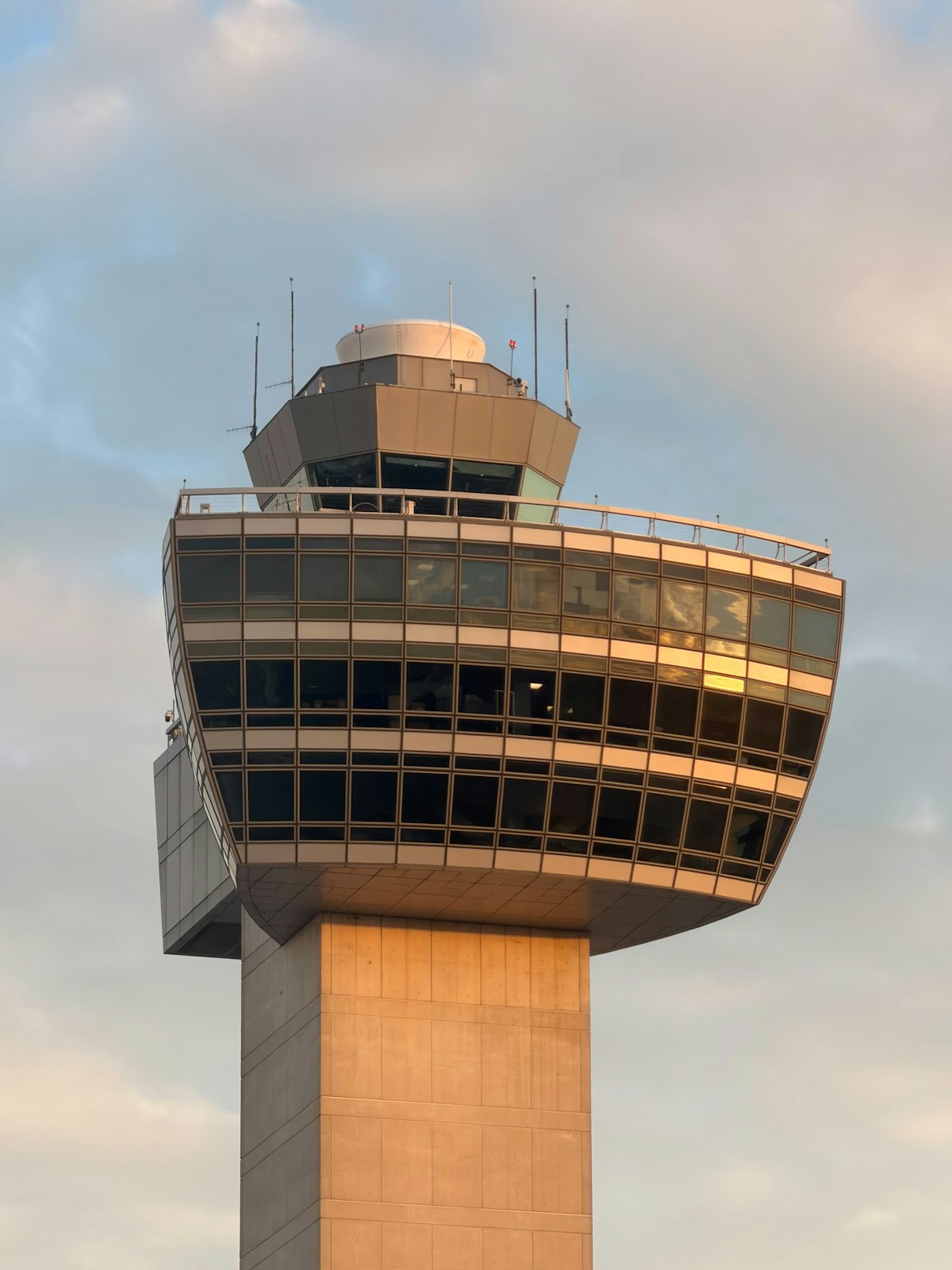
- Frequency congestion: Busy airspace can have dozens of aircraft trying to communicate on the same frequency
- Language barriers: Non-native English speakers may struggle with rapid-fire communications
- Readback errors: Mishearing or misremembering instructions causes dangerous mistakes
- No permanent record: Voice communications are ephemeral unless specifically recorded
- Single-channel limitation: Only one party can speak at a time
Studies found that up to 10% of voice communications contained some form of error – wrong altitude, wrong heading, wrong frequency. Most were caught and corrected, but each error represented a potential safety hazard.
The Human Factors Challenge
Voice communication demands significant cognitive resources. Pilots must listen carefully to distinguish their callsign from similar-sounding aircraft, mentally parse complex clearances, transcribe instructions accurately, formulate readbacks, and monitor for controller confirmation—all while managing other flight duties.
Accents, radio interference, and background noise compound these challenges. A controller with a heavy accent speaking quickly over a scratchy frequency can be nearly incomprehensible, even to experienced pilots. The potential for miscommunication scales with traffic density, precisely when accuracy matters most.
Enter CPDLC
CPDLC works like aviation’s version of text messaging. Controllers send digital messages to specific aircraft, and pilots respond with digital acknowledgments. The system provides:
- Written record: Every message is logged with timestamps
- Automatic loading: Clearances can upload directly to the flight management system
- No frequency congestion: Messages don’t compete for airtime
- Clear presentation: Text is easier to read than voice is to hear
- Reduced workload: No need to copy clearances by hand
How It Works in Practice
A typical CPDLC exchange might look like this:
Controller message: “CLIMB TO FL380”
The message appears on the cockpit display with an audible chime. The pilots review it, and if they can comply, they press “WILCO” (will comply). The response is transmitted automatically, and many aircraft can load the new altitude directly into the autopilot with a single button press.
Compare this to voice: “United 492, climb and maintain flight level three eight zero.” The pilot must hear the instruction, write it down, read it back, receive confirmation, then manually dial the new altitude into the autopilot. The CPDLC process is faster, clearer, and less error-prone.
Message Types and Capabilities
CPDLC supports a standardized set of message types covering common ATC instructions: altitude changes, route modifications, speed assignments, frequency changes, and position reports. More complex clearances—like oceanic crossing clearances that might take minutes to communicate by voice—transmit as single messages.
The system also supports free-text messaging for non-standard communications, though standardized messages are preferred for their unambiguous interpretation. Pilots can initiate requests (requesting higher altitude, for example) as easily as controllers can issue instructions.
Oceanic Operations: Where CPDLC Shines
CPDLC has proven most valuable over oceans, where traditional radar coverage doesn’t exist. Before data link, oceanic flights required huge separation distances – aircraft might be 100 nautical miles apart laterally and 2,000 feet vertically because position reports came only every 30-60 minutes via high-frequency radio.
With CPDLC and Automatic Dependent Surveillance-Contract (ADS-C), aircraft continuously report their positions. Controllers know exactly where each aircraft is, enabling:
- Reduced separation standards (30 nm lateral, 1,000 feet vertical)
- More efficient routing with fewer miles flown
- Dynamic rerouting around weather
- Fuel savings from optimal altitudes
Airlines estimate that CPDLC-enabled oceanic operations save 3-5% fuel on transatlantic flights through better routing alone.
Domestic Implementation
CPDLC is increasingly used in domestic airspace as well. The FAA’s Data Comm program has equipped high-altitude centers and major airports with CPDLC capability. Benefits include:
- Faster delivery of complex clearances at busy airports
- Reduced radio frequency congestion
- More efficient departure clearances
- Quicker rerouting around weather
At airports like Newark, Atlanta, and Chicago O’Hare, departure clearances that once required back-and-forth radio calls now arrive as single text messages that pilots can load with one button press.
The Global Mandate
Recognizing the safety and efficiency benefits, aviation authorities have mandated CPDLC for certain operations:
- North Atlantic: CPDLC required for all aircraft since 2020
- European airspace: Data link mandated above FL285
- US high altitude: CPDLC preferred, with increasing coverage
Airlines that don’t equip face routing penalties – longer, less efficient flight paths that cost more in fuel and time.
Challenges and Limitations
CPDLC isn’t perfect. The system can experience delays during high-traffic periods. Urgent communications still require voice – a traffic conflict warning comes over the radio, not as a text message. Pilots must manage both systems simultaneously, adding to cockpit complexity.
Some pilots miss the human element of voice communication. Hearing a controller’s tone of voice conveys information that text cannot. But the safety and efficiency benefits have proven compelling enough to drive widespread adoption.
The Future of ATC Communication
CPDLC is just the beginning. Future systems may enable direct aircraft-to-aircraft communication for collision avoidance, automatic conflict resolution without controller intervention, and AI-assisted routing that optimizes the entire airspace system in real-time.
The age of radio chatter isn’t quite over – you’ll still hear “cleared for takeoff” spoken aloud. But increasingly, the routine business of air traffic control happens silently, through data links that are faster, clearer, and safer than the human voice ever could be.



Stay in the loop
Get the latest flighttechtrends updates delivered to your inbox.