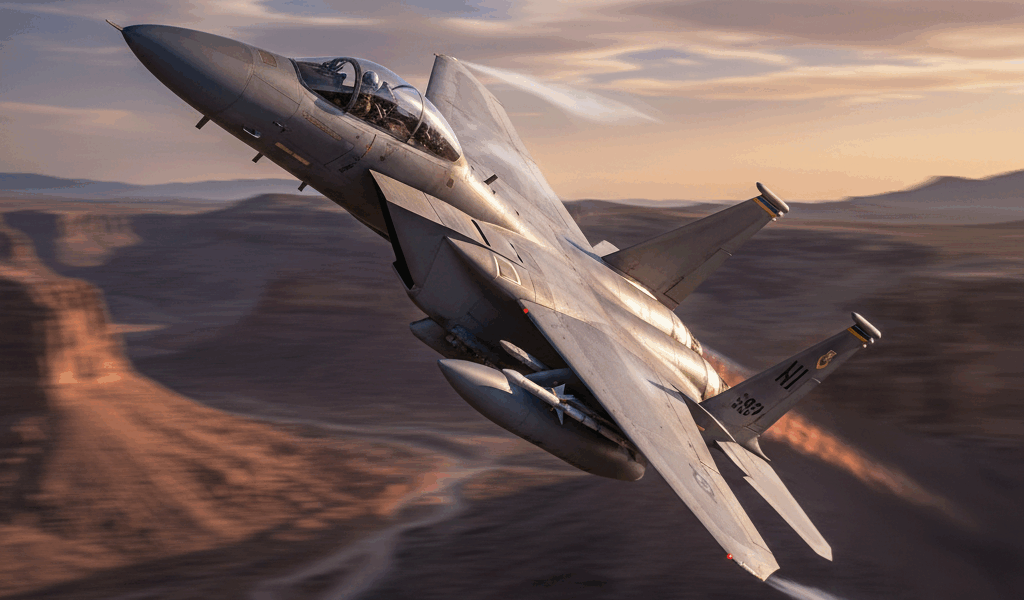
As someone who’s spent years tracking combat aircraft and operational records, I’ve learned everything there is to know about why the F-15E Strike Eagle is still genuinely relevant in 2026 — and why that’s not a nostalgia argument. Today, I’ll share it all with you.
The F-15E Strike Eagle first flew in 1986. The World Wide Web didn’t exist yet. The Berlin Wall was still standing. And yet here we are, and the F-15E is still flying combat missions for the U.S. Air Force, still the primary deep-strike aircraft in the American tactical inventory for certain missions, and still regarded by the pilots and WSOs who fly it as one of the finest combat aircraft ever built. How did a jet designed in the 1970s manage to remain operationally relevant when aircraft it was supposed to eventually replace are themselves now being retired?
What the Strike Eagle Was Built to Do
The F-15E was developed as a dedicated deep interdiction aircraft — a two-seat evolution of the F-15D with a weapons system officer (WSO) in the rear cockpit and the structural and avionics modifications necessary to carry heavy ground attack payloads at low altitude and high speed. The baseline mission was penetrating Warsaw Pact air defenses to strike targets deep in Eastern Europe.
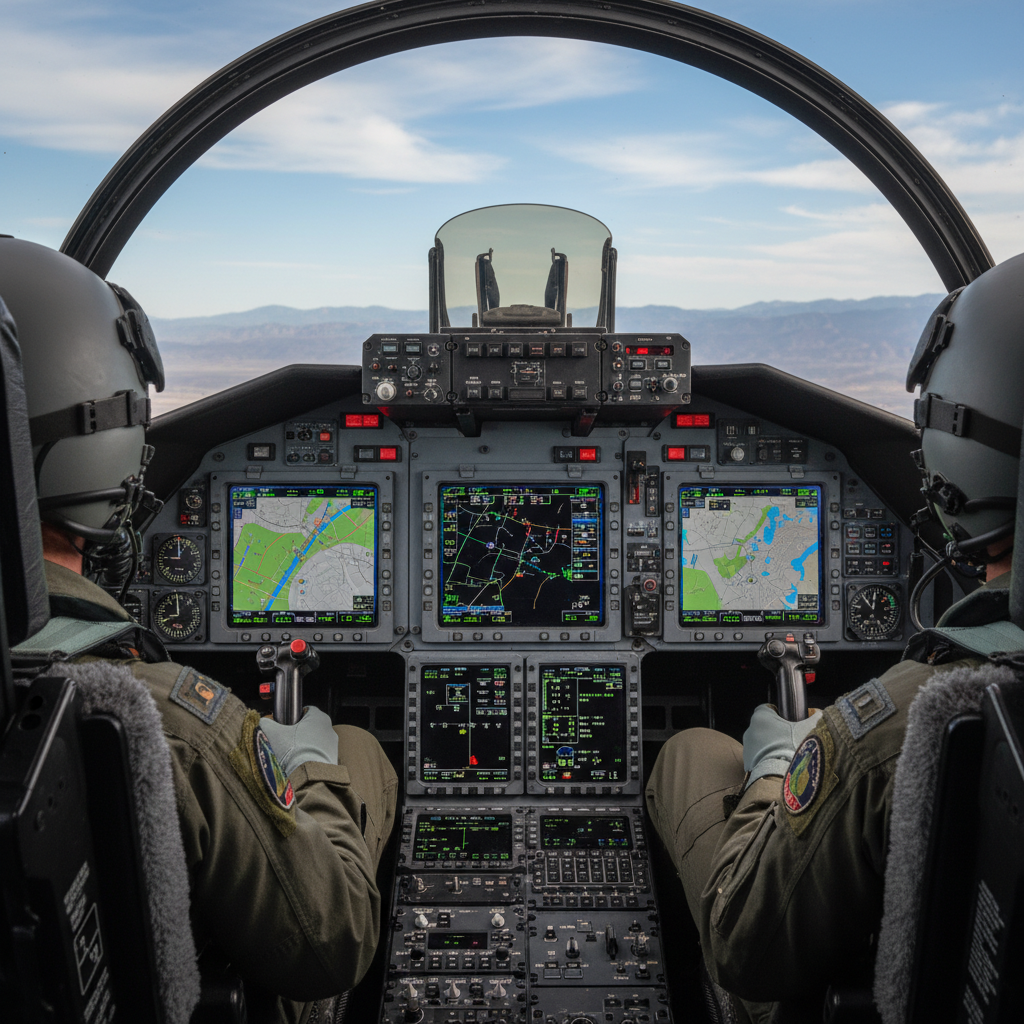
That mission profile shaped everything about the aircraft. The airframe was strengthened to handle the stress of sustained low-altitude high-speed flight. The conformal fuel tanks, unique to the Strike Eagle, mount flush against the fuselage and carry over 2,000 pounds of fuel each without the drag penalty of external tanks. The rear cockpit is optimized for the WSO to manage sensors, weapons, and navigation while the pilot focuses on flying.
Combat Record That Speaks for Itself
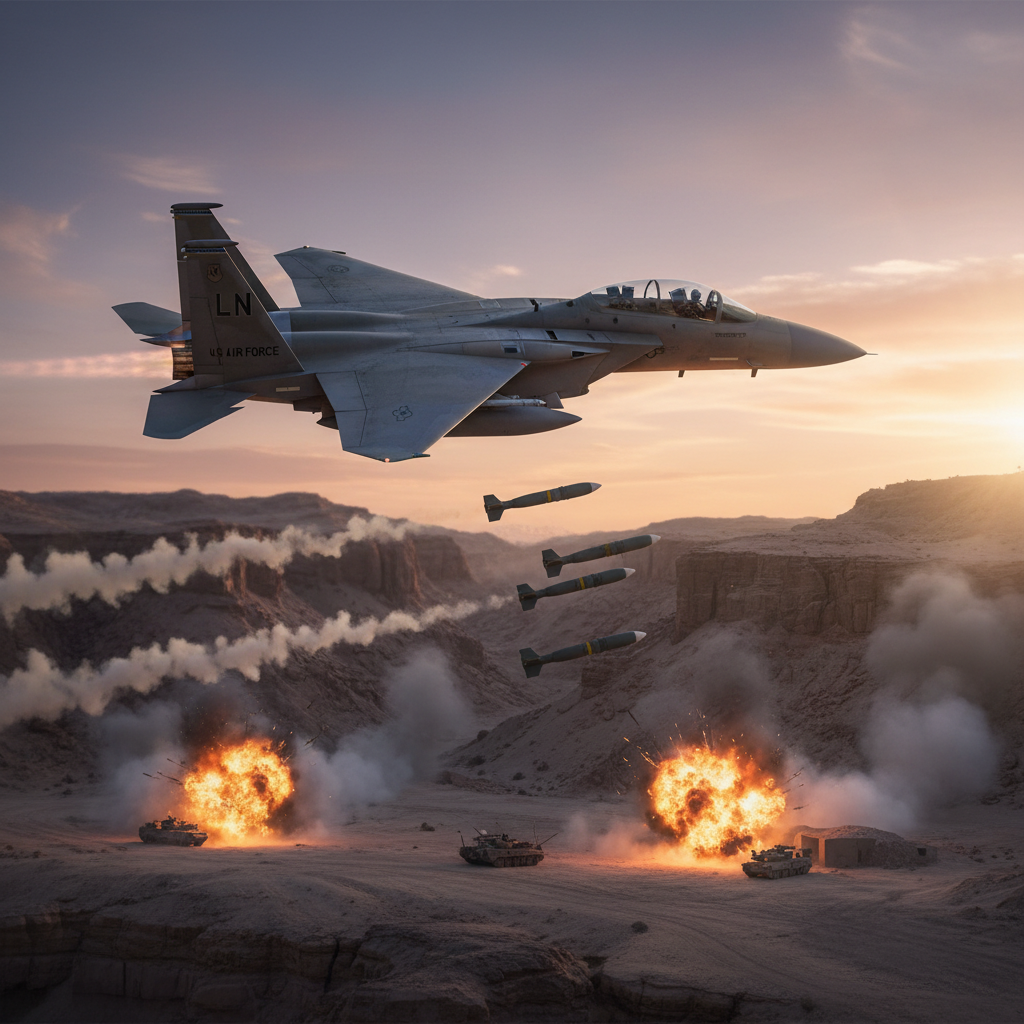
Desert Storm in 1991 saw Strike Eagles flying more combat sorties than any other coalition aircraft. They hit airfields, command bunkers, SCUD launcher sites, and infrastructure targets — exactly the deep interdiction missions the aircraft was built for. Kosovo, Afghanistan, Iraq — the Strike Eagle was present and doing the work in every major campaign.
When the Air Force needed a platform capable of dropping the Massive Ordnance Penetrator — the 30,000-pound bunker-busting bomb — the F-15E was modified to carry it. No other tactical aircraft can carry a 30,000-pound weapon.
The WSO: The System That Makes It Work
The Weapon Systems Officer in the rear seat of an F-15E is not a copilot — they’re a specialist who manages the AN/APG-82 AESA radar, the LITENING targeting pod, the ATFLIR, and the tactical employment of the weapons. In high-workload environments — low altitude, night, complex target sets, electronic warfare activity — having a second set of eyes and hands dedicated to the systems is a genuine capability advantage.
I’m apparently one of the few people who argues that the two-crew configuration’s cognitive load reduction benefit is understated in force structure debates. The WSO’s ability to independently manage navigation, threat awareness, and weapons sequencing allows the pilot to focus on flying the aircraft. Single-seat platforms have gotten better at managing this through automation, but there are environments where the human WSO is faster and more adaptable.
Why It’s Still Relevant
The F-15E is still relevant because its core capabilities — long range, heavy payload, precision strike — haven’t been replicated more cheaply or effectively by its successors. The F-35A is stealthy and networked, but its payload is less than the Strike Eagle’s and its cost is high enough that using it as a truck for conventional munitions in low-threat environments is inefficient. The F-22 doesn’t carry ground attack weapons in meaningful quantities.
The Strike Eagle fits a role the fleet hasn’t filled elsewhere — a capable, survivable, heavy-payload strike platform at a cost per flight hour that allows sustained campaign operations. The Air Force has been upgrading the F-15E’s avionics continuously: the APG-82 AESA radar, the EPAWSS electronic warfare system, and modern data links keep the aircraft current against emerging threats. A well-upgraded F-15E in 2026 would be unrecognizable in its electronic warfare capabilities to the pilots who flew it in Desert Storm.
The Legacy
The F-15E Strike Eagle will eventually be replaced. But it will leave behind a combat record that few aircraft in history can match — designed for a Cold War scenario that never happened, then proved itself in actual conflicts against real adversaries. When it finally leaves the inventory, it will be missed by the commanders who relied on it to do things nothing else could do quite as well.



Stay in the loop
Get the latest flighttechtrends updates delivered to your inbox.