Today, I will share it all with you.
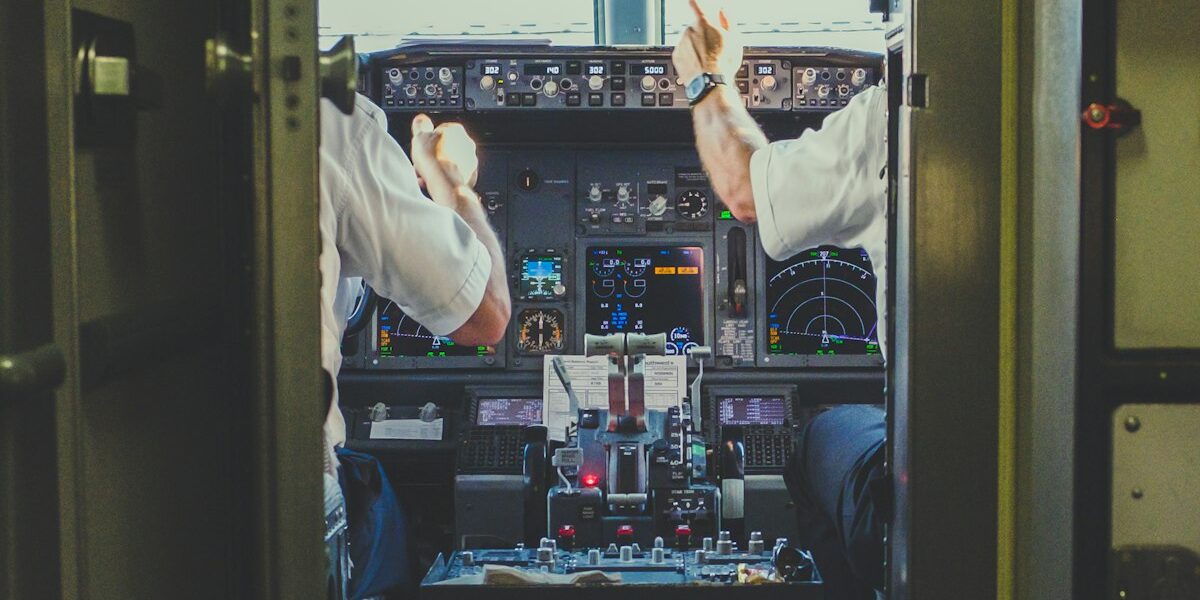
I still remember the first time an airline pilot explained fly-by-wire to me. “See that stick? It’s basically a fancy video game controller. Nothing connects it to anything.” I didn’t believe him. Surely there was a cable somewhere. Nope. Your 787 is literally flown by wire and prayer. Well, wire and a lot of redundant computers.
The Old Days: Brute Force and Cable Grease
My dad flew 727s back in the day. Pull the yoke, and you were physically hauling on cables that ran all the way back to the tail. He’d come home with sore arms after a gusty approach. Sounds nuts now, but that’s how aviation worked for most of its history.
Those cables added weight nobody wanted. Maintenance crews spent hours tensioning them, greasing pulleys, replacing worn sections. Bigger jets needed hydraulic assistance because humans literally couldn’t move the controls otherwise. And pilots could — and occasionally did — yank hard enough to break things.
The Mechanical Era’s Limitations
Mechanical flight controls worked but imposed real constraints. Cable stretch limited precision. Friction in pulley systems created control lag. Temperature changes affected cable tension, requiring constant adjustment. The weight of all those control runs — cables, pulleys, bellcranks, pushrods — added hundreds of pounds to the aircraft.
Hydraulic boosters helped but introduced new headaches. Hydraulic systems could fail, leak, or freeze. They required pumps, reservoirs, and miles of high-pressure lines. And even with hydraulic assistance, control feel was artificial — pilots couldn’t actually sense the aerodynamic forces acting on the surfaces.
Fighter Pilots: The Guinea Pigs
The F-16 changed everything. Lockheed designed it to be unstable on purpose. Crazy, right? An airplane that can’t fly straight without computer help? But that instability makes it insanely maneuverable. The computer makes corrections faster than any human could, which lets pilots focus on fighting instead of just staying airborne.
Once that worked, fly-by-wire spread everywhere. F-18. F-22. Every fighter you’ve seen at an airshow in the last 30 years. The military basically beta-tested the technology for decades before passengers ever sat behind it.
Relaxed Static Stability
Traditional aircraft are designed to be naturally stable — disturb them and they return to equilibrium without pilot input. Stability costs you maneuverability though, and fighter pilots need rapid maneuverability above everything else.
Fly-by-wire enables what’s called relaxed static stability. The aircraft is designed slightly unstable, making it extraordinarily responsive. Computers continuously correct the instability with small control surface adjustments dozens of times per second — faster than any pilot could react. The result: aircraft that maneuver like nothing before them, yet feel stable to the pilot.
Airbus Said “Hold My Beer”
1984: Airbus announces the A320 will ditch cables entirely. Industry reaction was… skeptical. Pilots unions weren’t thrilled. Safety experts had questions. Passengers probably would’ve been terrified if they’d understood what was happening.
But Airbus had a trick: envelope protection. Their computers don’t just translate what pilots want — they filter it. Try to do something stupid and the airplane just… won’t. Too much bank? Limited. About to stall? Blocked. Approaching structural limits? Nope.
Pilots were divided. Some loved the safety net covering their mistakes. Others hated feeling like they weren’t really flying anymore. That argument still pops up in pilot forums today, and honestly both sides have legitimate points.
The Philosophy of Envelope Protection
Airbus’s approach reflects a specific design philosophy: preventing pilots from exceeding aircraft limits protects safety in the vast majority of situations. The computers define a “flight envelope” and won’t allow excursions beyond it regardless of pilot input.
Critics ask a fair question: what about the emergency that requires exceeding normal limits? Airbus argues such situations are vanishingly rare, and the protection benefits outweigh the costs. Forty years of A320 operations provide substantial safety data supporting their case.
Boeing’s Take: “We Trust You More”
The 777 brought them into fly-by-wire in 1995, but with a different philosophy. Boeing lets pilots override more protections. Their thinking: sometimes you need to do impossible things to survive impossible situations.
I’ve talked to captains on both fleets. Airbus folks appreciate the safety net. Boeing folks like having the final say. Both have excellent safety records. Neither is wrong — they’re just different design philosophies reflecting different assumptions about humans versus machines.
How It Actually Works
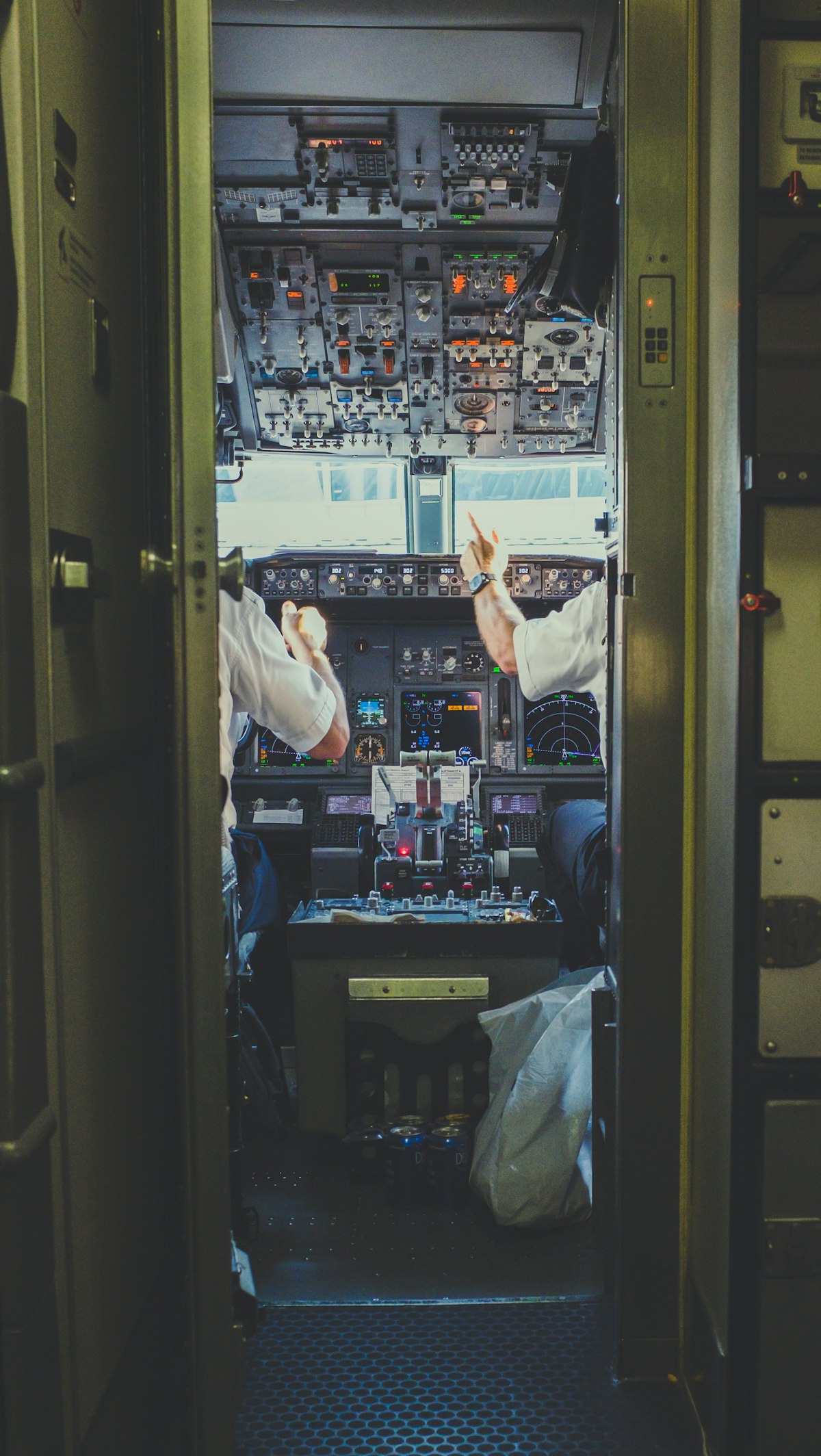
You move the stick. Sensors measure that movement thousands of times per second. Multiple computers crunch those numbers alongside everything else: airspeed, altitude, attitude, weight, weather conditions.
Then electrical signals command hydraulic actuators to move the actual control surfaces. More sensors confirm they moved correctly. The computers adjust if needed. This whole loop runs continuously from takeoff to touchdown.
No cables. No pulleys. No physical connection whatsoever between the cockpit and the parts steering the plane.
Paranoid Redundancy
Airlines love redundancy, and fly-by-wire takes it to extremes. The 777 has three primary flight computers with three internal lanes each — nine independent calculations running simultaneously. The A350 goes further: different manufacturers, different software, different hardware for backup channels. A software bug literally can’t take down all systems at once because they’re not running the same software.
Total failure probability? Engineers calculate it at less than one per billion flight hours. You’ll win Powerball before fly-by-wire fails completely.
Dissimilar Redundancy
Simple redundancy — multiple identical systems — handles random hardware failures. But a software bug would hit all identical computers simultaneously. That’s why backup channels use different processors, different programming languages, different development teams. The probability that independent groups make identical mistakes approaches zero. Costs more, but provides protection that no amount of identical redundancy can match.
Why Airlines Love It
Forget safety for a second. Airlines care about money, and fly-by-wire saves tons of it. No cables means 1,000+ pounds less weight on widebodies. Every pound burns fuel forever. Maintenance is simpler. Engineers can route control paths wherever they want. Computers automatically trim for efficiency better than any pilot could manually.
It’s not just safer. It’s cheaper. That’s why every new airliner assumes fly-by-wire from the start of the design process.
Where This Goes Next
Machine learning is creeping into these systems. Computers that learn each specific airplane’s quirks. Some people are discussing single-pilot cargo operations, with fly-by-wire automation picking up the slack.
Forty years after that controversial A320 decision, nobody’s going back to cables. The technology works. It’s proven in billions of flight hours. Next time you’re on a jet, think about the fact that nothing connects your pilot’s hand to anything moving outside. Just electrons and algorithms and a whole lot of faith in good engineering.



Stay in the loop
Get the latest flighttechtrends updates delivered to your inbox.