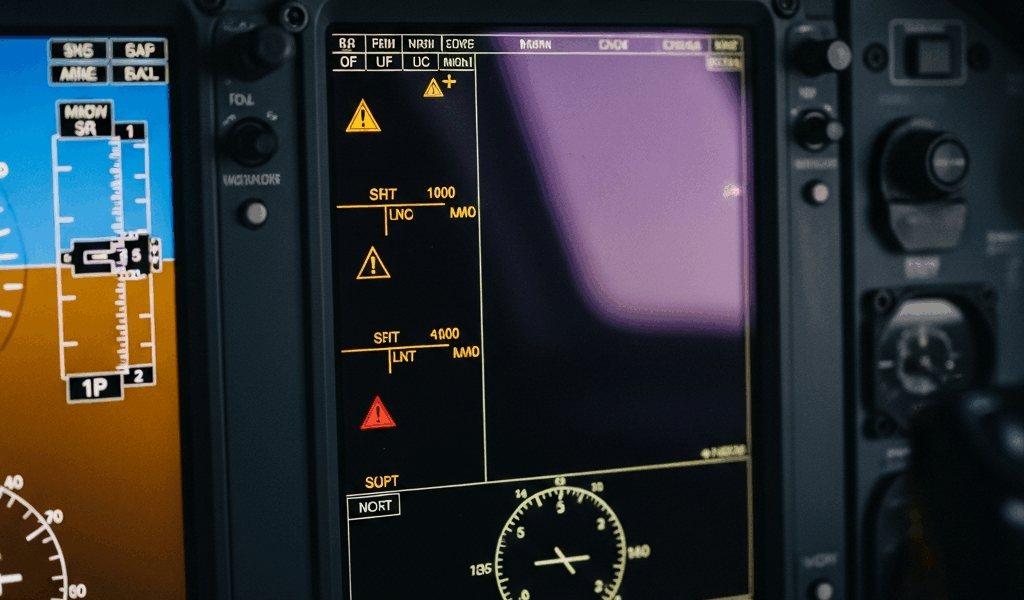
Why G1000 NXi Annunciators Confuse Pilots
You’re cruising at 3,500 feet over Kansas when it happens. The panel flashes amber. ALT LOAD. Your heart jumps — the engine sounds fine, everything feels normal. You flip through the Garmin manual and find something vague about alternator output. That’s it. Nothing in the POH tells you whether you’re diverting to the nearest strip or pushing on to your destination 45 minutes ahead.
This is the actual problem with G1000 NXi annunciators. They read like a parts catalog instead of an operational manual. The system tells you what it detected. It doesn’t tell you what to actually *do* about it. Probably should have opened with this section, honestly, because pilots don’t need another definition. You need triage logic. Real-world context. Permission to breathe.
Critical vs Advisory Warnings — Red vs Amber Lights
The G1000 NXi uses a two-tier warning system. Understanding the difference saves you from panic and dumb decisions in the moment.
Red annunciators mean land as soon as safely practicable. These catch system failures that compromise your safety margins — engine fire, low oil pressure, vacuum system failure. The system isn’t suggesting anything. It’s saying: get on the ground, now.
Amber annunciators mean investigate and monitor. Something’s outside normal parameters, but you likely have time to figure out what’s happening and make a real decision. This is where you actually think.
I learned this the hard way during a Cherokee Six ferry flight three years back. About 20 minutes in, the vacuum pressure annunciator lit amber. The textbook response would have been immediate diversion. Instead, I checked the gauge — it read 4.2 inches, just below the 4.5-inch threshold. The gyro instruments were rock-solid. No drift, no precession. I logged it and kept flying. Turned out the vacuum pump was simply wearing down — it needed replacement at the next 100-hour inspection. That’s an amber warning doing exactly what it should: alerting you without forcing a crisis.
Red warnings don’t work that way. You see red, you find the nearest suitable runway.
Most Common NXi Warnings Pilots Actually Encounter
Alternator Load (ALT LOAD)
What it means: The alternator has dropped offline or the electrical system is pulling more power than the alternator can deliver.
One-line cause: Alternator failure, loose belt, or you’ve got anti-ice, defroster, and every other load running simultaneously.
Check first: Look at the ammeter gauge. Negative reading? Turn off non-essential electrical loads immediately — pitot heat, landing light, cabin lights, all of it. Do not continue on instruments alone. Positive ammeter reading means the alternator is still charging — this is a nuisance alert (skip to false flags). Negative and it persists after load-shedding? Plan the landing. You’re on borrowed battery time.
Vacuum System Pressure (VAC SYS PRESS)
What it means: Vacuum system pressure dropped below 4.5 inches of mercury.
One-line cause: Vacuum pump bearing wear, loose fitting, or internal pump failure.
Check first: The actual gauge on your MFD. Reading 4.0–4.4 inches with rock-solid autopilot and attitude indicator? This is likely a sensor drift or pump aging — not an emergency. Below 3.5 inches or instruments are drifting? Land within the hour. Pneumatic instruments become unreliable once the vacuum drops.
Fuel Imbalance (FUEL IMBAL)
What it means: Left and right fuel tanks are out of balance by more than the system threshold — typically 5% of total capacity.
One-line cause: Fuel selector in the wrong position, fuel flow sensor failure, or actual unequal consumption from your tanks.
Check first: The fuel page on the MFD. Look at the actual gallon numbers for each tank. One tank at 0 gallons, the other at 15, and your fuel selector locked on a single tank? You’re flying lopsided — select the fuller tank or both immediately. Readings don’t match what you saw during your visual preflight after topping off both tanks equally? It’s a sensor fault. You can continue but flag it for maintenance. This amber alert almost never requires diversion on modern aircraft with reliable fuel systems.
Airspeed Disagree (AIRSPD DISAGREE)
What it means: Primary and backup airspeed sources don’t match by more than 10 knots — usually primary pitot versus secondary pitot or cross-checked system logic.
One-line cause: Pitot static line blockage, sensor contamination, or a failed transducer.
Check first: Which airspeed is reporting on the PFD? Primary erratic — jumping 20 knots in stable flight? Turn on pitot heat if you’re in icing conditions. If both sources read different steady values, the pitot tubes probably have different heating status. Flight is legal but log it for maintenance. Do not trust autopilot in this condition (it’ll follow the bad sensor). Hand-fly to your destination and report it on arrival.
Pitot Heat
What it means: The pitot heater element failed or the circuit is reporting a fault.
One-line cause: Heater element burn-out, failed relay, or electrical circuit fault.
Check first: Is the pitot heat switch actually working? Flip it off for 5 seconds, then back on. Sometimes the system resets itself. If the amber light hangs around, the element is dead. Flight is legal, but avoid known icing — your airspeed becomes unreliable if the pitot ices over. VFR in clear skies? You’re fine. IMC or building thunderstorms? Divert.
Known False Flags and Nuisance Alerts
The G1000 NXi is extraordinarily reliable. It’s also extraordinarily sensitive. Some warnings are pure ghosts.
Temperature probe overshoots on cold-soaked mornings: It’s 6 a.m. in February, preflighting in −15°C weather. Engine starts, and the temperature probe annunciator pops amber for maybe 30 seconds, then clears. Not an engine problem — the probe was cold-soaked and warm engine air created momentary sensor lag. I’ve seen this happen almost every cold start in Cirrus and Cessna glass panels I’ve flown. Skip the logbook entry if it clears by the time you’re rolling.
AHRS gyro recalibration alerts after reboot: You powered down the panel for maintenance, powered it back up. The attitude indicator flags briefly — maybe amber “AHRS ALIGN” appears. The system is recalibrating its gyroscopic reference. Sit on the ground wings level for 3 minutes. It clears. If it persists in flight, then you’ve got a real gyro issue.
Electrical system sensor jitter: The ALT LOAD annunciator flashes amber for a single cycle during engine start, then vanishes forever. The alternator was probably still spooling up. Modern G1000 installations have extremely sensitive electrical monitoring — a 0.2-second voltage dip triggers the alert. If it clears and doesn’t come back, ignore it.
When to Defer Maintenance vs Land ASAP
The real operational decision: Does this system failure limit my ability to operate safely *right now*?
Fuel imbalance warning with stable quantities and a working fuel selector? Defer it. Logbook entry, schedule maintenance at your next stop. The airplane flies straight without any intervention from you.
Vacuum system pressure warning with instruments drifting in precession? Land within 30 minutes. Your electrical attitude indicator may not be installed, and the vacuum-driven AI is becoming unreliable. This warning has teeth.
Alternator load warning with negative ammeter reading that sticks around after you’ve shed non-essential electrical loads? You’re 20 minutes from home. You can continue if the ammeter holds negative at a slow discharge rate — meaning your battery is losing power gradually. You have a time window: how long until the battery can’t power essential instruments anymore? If you’re 90 minutes out, find an airport 30 minutes ahead and land. The battery math works. Go past that window and you’re betting the entire panel on a dead battery in actual instrument conditions. That’s not acceptable.
Amber warnings let you build a decision matrix. Red warnings don’t. Red is “land now.” Amber is “what’s the real operational impact?”
The G1000 NXi annunciators exist for a reason: situational awareness. The system is more honest than you might be with yourself about a small flutter or a barely-noticeable electrical fluctuation. Trust the alert enough to check it. Trust your own analysis enough to make the call. That’s how experienced pilots and the NXi work together.




Stay in the loop
Get the latest flighttechtrends updates delivered to your inbox.