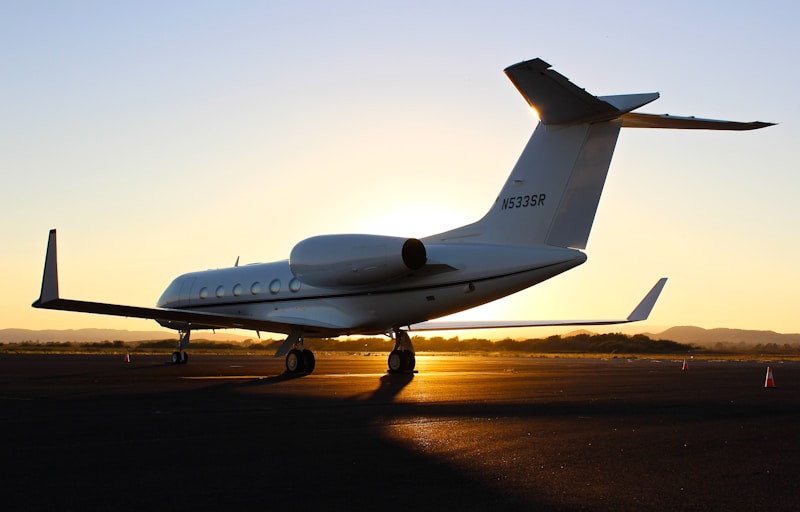
Innovation at the Forefront of Aviation
The aviation industry has always been defined by innovation, and today’s leading equipment manufacturers are pushing technological boundaries further than ever before. From advanced avionics systems to revolutionary propulsion technologies, global equipment innovators are reshaping how aircraft are designed, built, and operated.
These companies don’t just supply parts—they drive the evolution of flight itself, developing solutions that make aviation safer, more efficient, and more sustainable.
The Pillars of Aviation Equipment Innovation
Modern aviation equipment innovation focuses on several critical areas that define the industry’s future:
Advanced Avionics and Flight Systems
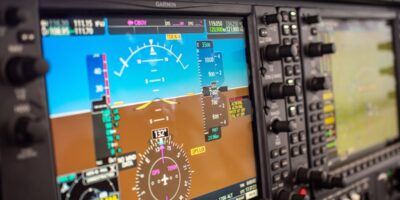
Today’s cockpit bears little resemblance to those of previous generations. Glass cockpit displays have replaced traditional analog instruments, providing pilots with intuitive interfaces that integrate multiple data streams into coherent, actionable information.
Leading avionics manufacturers are developing systems that incorporate artificial intelligence to assist with flight planning, weather avoidance, and predictive maintenance. These smart systems can identify potential mechanical issues before they become critical, dramatically improving safety and reducing operational costs.
Propulsion System Breakthroughs
Engine manufacturers are achieving unprecedented levels of efficiency and performance. Modern turbofan engines deliver significantly more thrust while consuming less fuel and producing fewer emissions than their predecessors.
Innovations in materials science have enabled engines to operate at higher temperatures and pressures, extracting more energy from every gallon of fuel. Ceramic matrix composites and advanced alloys can withstand extreme conditions while reducing overall engine weight.
Aerodynamic Enhancement Technologies
From winglets that reduce drag to adaptive wing surfaces that optimize performance across different flight phases, equipment innovators are continually refining aircraft aerodynamics.
Computational fluid dynamics and wind tunnel testing have reached new levels of sophistication, allowing manufacturers to design components with unprecedented precision. Even small improvements in aerodynamic efficiency translate to significant fuel savings across thousands of flight hours.
Leaders Shaping the Industry
Several companies have established themselves as global leaders in aviation equipment innovation:
Honeywell Aerospace
Honeywell has become synonymous with advanced aircraft systems, producing everything from auxiliary power units to sophisticated fly-by-wire systems. Their integration of software and hardware has set industry standards for cockpit automation and passenger cabin systems.
The company’s investment in connected aircraft technologies is enabling real-time data transmission from aircraft to ground operations, facilitating better maintenance scheduling and operational decision-making.
Collins Aerospace
A division of Raytheon Technologies, Collins Aerospace supplies systems for virtually every aspect of flight. Their innovations span landing gear, flight controls, interior systems, and communication equipment.
Collins has been particularly influential in developing electric and hybrid-electric propulsion components, positioning themselves for the next generation of aircraft power systems.
Safran Group
This French multinational is a powerhouse in both propulsion and equipment systems. Through their joint venture with GE Aviation (CFM International), Safran helped develop the LEAP engine, which powers the Boeing 737 MAX and Airbus A320neo family—the world’s best-selling commercial aircraft.
Safran’s expertise extends to landing and braking systems, cabin interiors, and electrical systems, making them a comprehensive solution provider for aircraft manufacturers.
Parker Hannifin
Specializing in motion and control technologies, Parker Hannifin produces critical flight control systems, hydraulic components, and fuel systems. Their products are integral to both commercial and military aircraft worldwide.
Parker’s innovations in hydraulic system efficiency have contributed significantly to reducing aircraft weight and improving fuel economy.
Emerging Technologies Driving Future Innovation
Electrification and Hybrid Systems
Equipment manufacturers are investing heavily in electric propulsion systems for both regional aircraft and urban air mobility vehicles. While fully electric long-haul flight remains distant, hybrid-electric systems for shorter routes are approaching commercial viability.
These systems promise dramatic reductions in fuel consumption and noise pollution, particularly for regional routes and airport ground operations.
Sustainable Aviation Fuel (SAF) Compatibility
As the industry pushes toward net-zero carbon emissions, equipment manufacturers are ensuring their products can operate efficiently with sustainable aviation fuels. This requires modifications to fuel systems, seals, and combustion components to accommodate different fuel chemistries.
Additive Manufacturing
3D printing technology is revolutionizing how aircraft components are produced. Complex parts that once required extensive machining and assembly can now be printed as single pieces, reducing weight, manufacturing time, and material waste.
Leading equipment suppliers are using additive manufacturing to create optimized component geometries that would be impossible to produce with traditional methods.
Advanced Materials
Innovation in materials science continues to unlock new performance capabilities. Carbon fiber composites, titanium alloys, and ceramic matrix composites are being deployed in increasingly critical applications, from engine components to structural elements.
These materials offer exceptional strength-to-weight ratios, corrosion resistance, and temperature tolerance, enabling aircraft to fly farther, faster, and more efficiently.
The Digital Revolution in Aviation Equipment
Perhaps the most transformative trend is the integration of digital technologies throughout aircraft systems:
Predictive Maintenance
Modern aircraft equipment is embedded with sensors that continuously monitor performance parameters. Machine learning algorithms analyze this data to predict when components will require maintenance, allowing airlines to schedule repairs proactively rather than reactively.
This approach minimizes unexpected failures and reduces aircraft downtime, improving both safety and economic efficiency.
Digital Twins
Equipment manufacturers are creating virtual replicas of their physical products—digital twins—that allow them to simulate performance, test modifications, and optimize designs without building physical prototypes.
These digital models are also used to monitor real-world equipment performance, comparing actual data against expected performance to identify anomalies and improvement opportunities.
Challenges Facing Equipment Innovators
Despite impressive advances, equipment manufacturers face significant challenges:
- Certification Complexity: New technologies must undergo rigorous testing and certification processes that can take years and cost millions
- Supply Chain Disruptions: Global supply chains for specialized aerospace materials and components remain vulnerable to disruptions
- Environmental Regulations: Increasingly stringent emissions and noise standards require continuous innovation
- Cybersecurity: Connected aircraft systems create new vulnerabilities that must be addressed
The Future of Aviation Equipment
Looking ahead, the pace of innovation shows no signs of slowing. Equipment manufacturers are exploring technologies that seemed like science fiction just a decade ago:
- Hydrogen fuel cell propulsion systems
- Autonomous flight technologies
- Morphing wing structures that adapt to flight conditions
- Quantum sensors for unprecedented navigation accuracy
- Advanced noise reduction technologies for urban air mobility
Partnering for Progress
The most successful equipment innovators recognize that collaboration drives progress. Strategic partnerships between manufacturers, airlines, research institutions, and regulators accelerate development and deployment of new technologies.
These partnerships are particularly crucial for tackling industry-wide challenges like sustainability, where no single company can solve the problem alone.
Conclusion: Innovation as a Constant
The leading global equipment innovators in aviation understand that standing still means falling behind. Their commitment to continuous improvement, technological advancement, and sustainable practices ensures that aviation will continue to evolve, becoming safer, cleaner, and more efficient with each passing year.
For passengers, these innovations translate to more reliable flights, quieter cabins, and lower environmental impact. For airlines, they mean reduced operating costs and improved competitiveness. And for the industry as a whole, they represent the pathway to a sustainable future for global air transportation.
As we look to the skies, we can be confident that the next generation of aviation equipment will be even more remarkable than what flies today—thanks to the vision and dedication of the world’s leading innovators.



Subscribe for Updates
Get the latest articles delivered to your inbox.
We respect your privacy. Unsubscribe anytime.