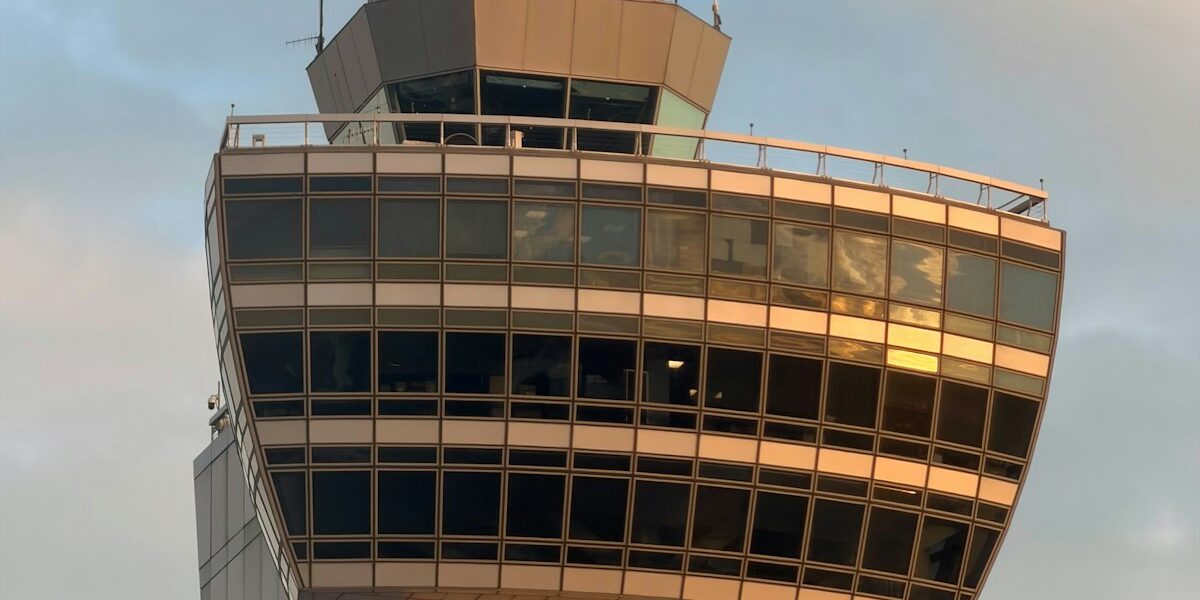
On a busy Friday afternoon at New York’s LaGuardia Airport, a Southwest Boeing 737 descends toward Runway 22. But instead of following the traditional stepped-down approach—level at 10,000 feet, then 6,000, then 3,000—the aircraft glides smoothly along a continuous arc, engines at idle, burning far less fuel than it would have just five years ago.
This is NextGen in action, and after two decades and $36 billion in investment, America’s air traffic control system has finally entered the 21st century.
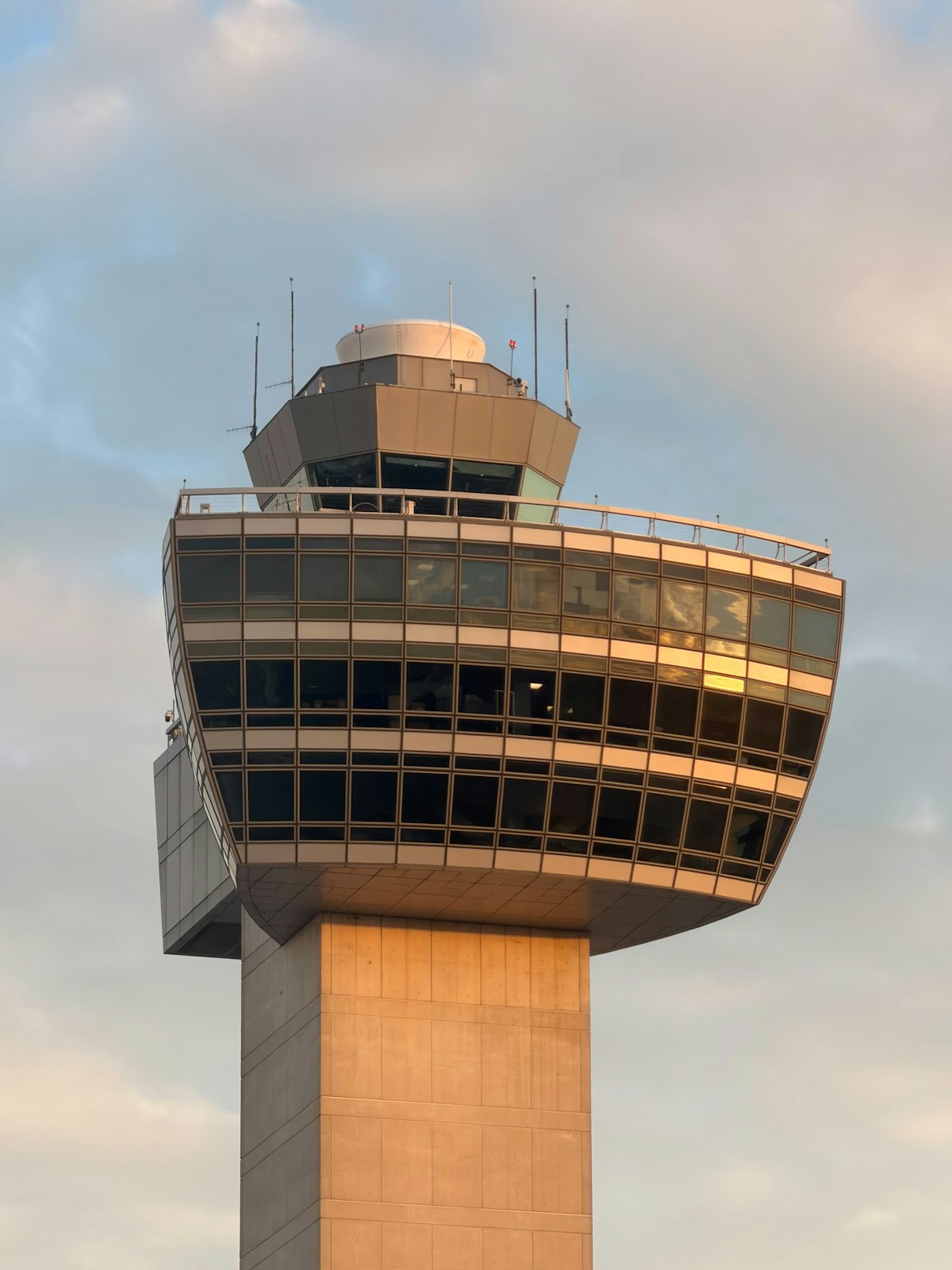
The System That Couldn’t Keep Up
For decades, the National Airspace System ran on technology that would seem antique in any other industry. Ground-based radar stations, developed in the 1950s, swept the sky every 12 seconds, providing controllers with positions that were already outdated by the time they appeared on screen. Voice radio, unchanged since the 1940s, forced pilots and controllers to exchange information through scripted, time-consuming readbacks.
Aircraft followed invisible highways in the sky—Victor airways and jet routes defined by ground-based navigation beacons spaced 50-100 miles apart. Planes couldn’t fly the most direct routes because the system couldn’t track them precisely enough to ensure separation.
The inefficiency was staggering. Aircraft routinely flew hundreds of extra miles per trip. Controllers spaced planes further apart than necessary because they couldn’t trust their position data. Delays cascaded through the system, costing airlines billions annually in wasted fuel and passenger frustration.
By 2003, with air traffic projected to double by 2025, the FAA faced a choice: build more runways (politically impossible in most metro areas) or fundamentally transform how aircraft navigate and communicate.
What NextGen Actually Is
NextGen isn’t a single technology—it’s a comprehensive modernization of nearly every aspect of air traffic control. The program encompasses navigation, surveillance, communication, and automation, all working together to create a more precise, efficient, and flexible airspace system.
The foundation is satellite-based navigation. GPS technology, refined for aviation use, allows aircraft to know their position within meters rather than the nautical miles of tolerance that ground-based systems required. This precision enables fundamental changes in how aircraft fly.
Key NextGen technologies include:
ADS-B (Automatic Dependent Surveillance-Broadcast): Aircraft continuously broadcast their GPS-derived position, altitude, speed, and identification. Ground stations and other aircraft receive these broadcasts, providing real-time position data far more accurate than radar. Since January 2020, virtually all aircraft operating in controlled U.S. airspace must have ADS-B Out capability.
RNAV and RNP (Area Navigation and Required Navigation Performance): With GPS precision, aircraft can fly any path through the sky, not just routes between ground beacons. RNP procedures define curved, precise approaches that older navigation systems couldn’t execute.
DataComm (Data Communications): Digital text messaging between controllers and pilots replaces some voice communications. Complex clearances that took 30 seconds to read and verify by voice now transmit in seconds with one-button acknowledgment.
TFMS (Traffic Flow Management System): Advanced automation helps controllers and airline dispatchers coordinate traffic flows, reducing ground delays by managing demand before aircraft even depart.
The Revolution in the Sky
NextGen’s impact is most visible in how aircraft now approach busy airports. Traditional approaches used “dive and drive” techniques—aircraft descended to an altitude, leveled off, flew to the next waypoint, descended again, and repeated until reaching the runway. Each level segment meant adding engine power, burning fuel, and generating noise.
Optimized Profile Descents (OPDs), enabled by NextGen precision, allow continuous descent approaches. Aircraft begin descending from cruise altitude 100 miles or more from the airport, maintaining idle thrust nearly to the runway. The fuel savings are substantial—10-40% reduction in fuel burn during descent phases.
Curved approaches using RNP-AR (Authorization Required) procedures allow aircraft to thread between noise-sensitive neighborhoods and terrain obstacles on paths that would have been impossible with older technology. Alaska Airlines pioneered these approaches at challenging airports like Juneau, where mountains crowd close to the runway.
Reduced separation standards are another major benefit. With precise position data from ADS-B, controllers can safely space aircraft closer together—sometimes as little as 3 miles versus the 5-mile radar standard. This increases runway capacity without building new concrete.
Measuring the Investment
The $36 billion NextGen price tag represents two decades of spending on ground infrastructure, aircraft equipment mandates, and ongoing development. The FAA invested roughly $20 billion directly, while airlines and aircraft operators spent an estimated $16 billion equipping their fleets.
The return on investment, while difficult to calculate precisely, appears substantial:
Fuel savings: The FAA estimates NextGen technologies save U.S. airlines approximately 480 million gallons of fuel annually—over $1.5 billion at current prices.
Delay reduction: Ground stops and airborne holding have decreased significantly. The FAA reports average delays have dropped by several minutes per flight, saving airlines billions in operational costs.
Capacity increases: Major hub airports have increased throughput by 10-15% using NextGen procedures, deferring or eliminating the need for new runway construction.
Environmental benefits: Reduced fuel burn translates directly to lower emissions. The FAA estimates NextGen prevents approximately 4.8 million metric tons of CO2 emissions annually.
Implementation Challenges
NextGen’s rollout hasn’t been smooth. The program faced years of delays, cost overruns, and criticism from airlines, pilot unions, and Congressional oversight committees.
Several factors complicated implementation:
Legacy system integration: The FAA couldn’t simply shut down the old system and turn on the new one. NextGen components had to work alongside 1960s-era equipment during a gradual transition lasting more than a decade.
Controller training: Experienced controllers had to learn entirely new procedures while continuing to work the nation’s busiest airspace. The human factors challenges were immense.
Airline equipage: The ADS-B mandate required every aircraft in controlled airspace to carry new transponders. Airlines balked at the cost, and the FAA extended deadlines multiple times before enforcing compliance in 2020.
Environmental reviews: New approach and departure procedures face environmental assessment requirements. Community opposition to changed flight paths delayed implementation at many airports, particularly in the Northeast.
The Current State of Play
As of 2025, core NextGen technologies are largely deployed. ADS-B surveillance covers the entire continental United States, including remote areas where radar never reached. DataComm operates at over 60 airports. Thousands of RNAV and RNP procedures guide aircraft along precise paths.
Yet the transformation continues. The FAA is now implementing “Trajectory Based Operations”—the next evolution that will coordinate aircraft paths from departure to arrival, optimizing flows across the entire national airspace rather than handing off between regional sectors.
Space-Based ADS-B, using Iridium satellite receivers, now tracks aircraft over oceans and polar regions where no ground infrastructure exists. This enables reduced separation over the Atlantic and Pacific, saving significant fuel on international routes.
Urban Air Mobility—the emerging air taxi industry—will require NextGen capabilities to integrate drones and electric vertical takeoff aircraft into an already crowded airspace. The precision and automation that NextGen provides will be essential.
What Passengers Experience
Most travelers remain unaware of NextGen, but its effects are tangible:
- Fewer departure delays from flow control programs
- Smoother descents with less engine noise on approach
- More on-time arrivals during weather events
- Real-time flight tracking (your phone knows exactly where your flight is because of ADS-B)
- Shorter routes at some city pairs where new procedures have been implemented
The improvements are subtle but meaningful. A flight that might have held for 20 minutes now sequences smoothly into the arrival flow. An approach that used to drone across neighborhoods at 3,000 feet now glides overhead nearly silently.
The Global Context
The United States isn’t alone in modernizing air traffic control. Europe’s Single European Sky ATM Research (SESAR) program parallels NextGen with similar technologies and goals. Australia, Japan, and Singapore have implemented advanced navigation and surveillance systems.
Harmonization remains challenging. Aircraft flying international routes must work with multiple air traffic systems, each at different stages of modernization. ICAO, the international aviation organization, works to ensure interoperability, but progress is slow.
The $36 billion investment has fundamentally transformed American aviation. The ground-based beacons that defined air travel for 70 years are being decommissioned. Radar is becoming a backup rather than primary surveillance. Voice radio increasingly yields to data link.
NextGen’s full promise—seamless gate-to-gate optimization, true trajectory-based operations, integration of autonomous aircraft—remains years away. But the foundation is built. After decades of waiting, the future of air traffic control has finally arrived.




Stay in the loop
Get the latest flighttechtrends updates delivered to your inbox.