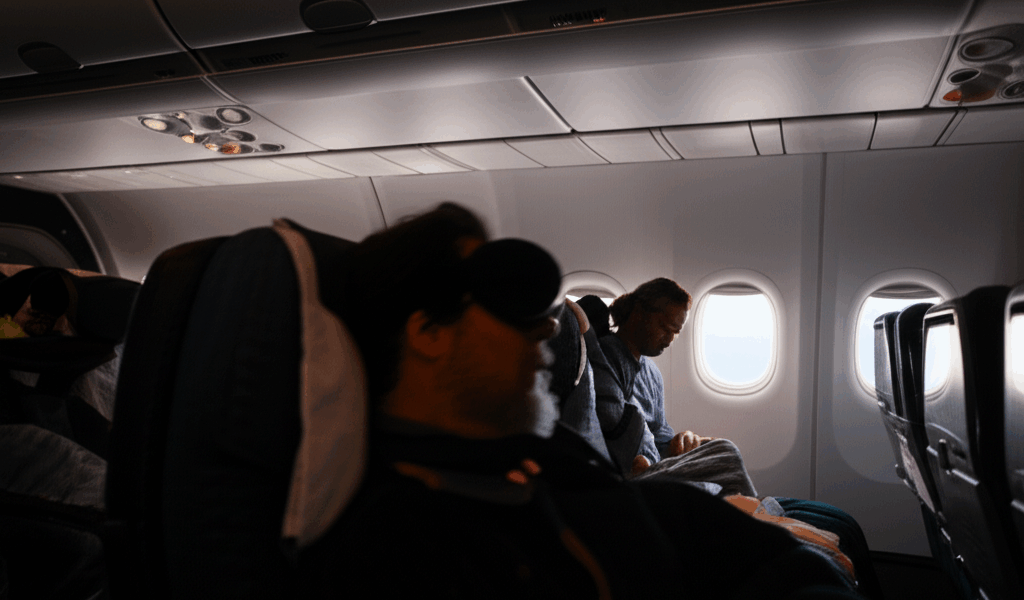
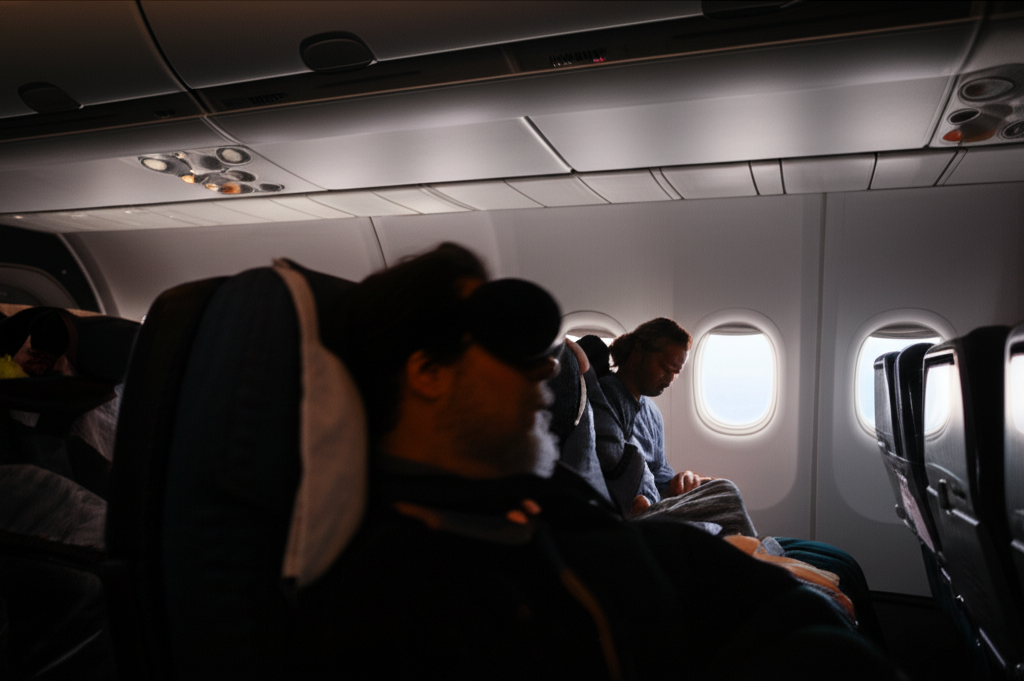
Red-eye flights have a way of separating the people who’ve figured out the system from everyone else. As someone who has taken more overnight flights than I’d like to count — and landed completely destroyed enough times to figure out what I was doing wrong — I learned every trick that actually makes a difference. Today, I will share it all with you.
Choose Your Seat Strategically
The seat decision on a red-eye matters more than on a daytime flight. Window seats are better for sleeping — you control the window shade, you don’t get climbed over during the flight, and you have a wall to lean against. That wall lean is worth something even if it seems small.
Avoid the last row. Non-reclining seats against the rear bulkhead are uncomfortable for sleeping, and the proximity to lavatories means more foot traffic and noise throughout the flight. Exit rows offer extra legroom but you can’t store anything underfoot, limiting access to your sleep kit.
If you’ll need to function the next day, a lie-flat business class seat on a long red-eye is a completely different experience than economy. Calculate what your productivity is worth against the upgrade cost. On transatlantic red-eyes, it’s often a legitimate business decision rather than a luxury one.
The Sleep Kit
A neck pillow keeps your head from dropping and waking you up repeatedly — the memory foam U-shaped ones provide better support than inflatable versions. An eye mask eliminates remaining light sources including screens around you. This is not optional if you want real sleep. Noise-canceling headphones handle engine roar that foam earplugs don’t fully address — Bose, Sony, and Apple AirPods Max all work well. A light packable down jacket rounds out the kit since cabins get cold overnight.
Probably should have mentioned this before listing every other preparation tip: having all four of these items is more important than any other single thing on this list.
Managing Light Exposure
Your circadian rhythm runs on light. If you’re flying eastward overnight, your goal is to adjust to the destination time zone as fast as possible. Avoid bright light in the evening before the flight if you’re trying to fall asleep early, and seek light immediately on arrival to reset your rhythm. On the flight, don’t watch screens for extended periods if you’re trying to fall asleep — the blue light keeps your brain alert in exactly the wrong direction.
Food and Drink on the Plane
Alcohol degrades sleep quality. You’ll sleep lighter, wake more often, and land dehydrated. If you have one drink, drink water alongside it. Caffeine has a 5–6 hour half-life, so cut it by 5 or 6 PM if you need to be asleep by midnight. I’m apparently someone who underestimated caffeine timing for years before doing the actual math — it makes a real difference.
Eat before you board. Meal service on overnight flights is often served at the worst time — right when you want to sleep. Having eaten in the terminal means you can decline service, pull your eye mask down, and sleep through the first hours of the flight. Drink water throughout — cabin air is extremely dry and dehydration makes jet lag measurably worse.
Sleep Aids
Melatonin at 0.5–1mg taken around the time you want to sleep can help shift your sleep timing. This is one of the better-supported interventions for jet lag — it’s a timing signal, not a sedative, so it won’t knock you out but it does help your body shift direction. OTC sleep aids like Benadryl work but often leave a grogginess hangover that lasts into the next morning, which defeats the purpose of the red-eye.
On Arrival
Get outside. Natural light on arrival suppresses melatonin and helps reset your circadian clock. Even 20 minutes of outdoor exposure makes a measurable difference. Stay awake until local bedtime — naps over 20–30 minutes make it harder to sleep that night and extend your adjustment period. Don’t schedule your most demanding work or activities for arrival day if you can help it.
The red-eye is manageable. Treating it as a challenge to solve rather than an ordeal to endure is what separates the travelers who arrive functional from the ones who spend the first day in a recovery spiral.


Stay in the loop
Get the latest flighttechtrends updates delivered to your inbox.