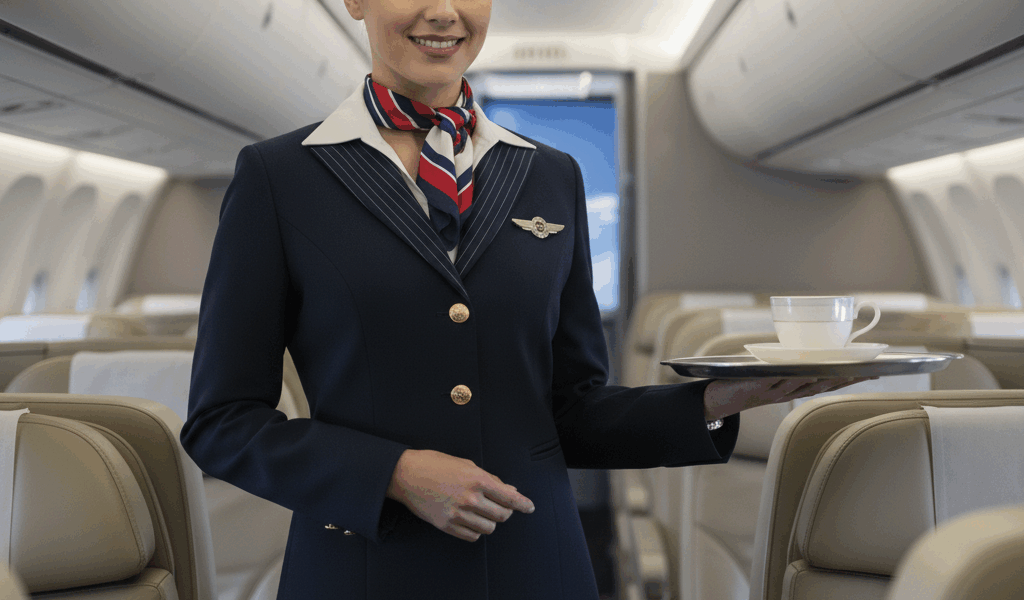
As someone who’s studied aviation branding and the functional requirements of crew workwear for years, I’ve learned everything there is to know about why British Airways’ uniforms are genuinely different — and what it means that they’re worth talking about at all. Today, I’ll share it all with you.
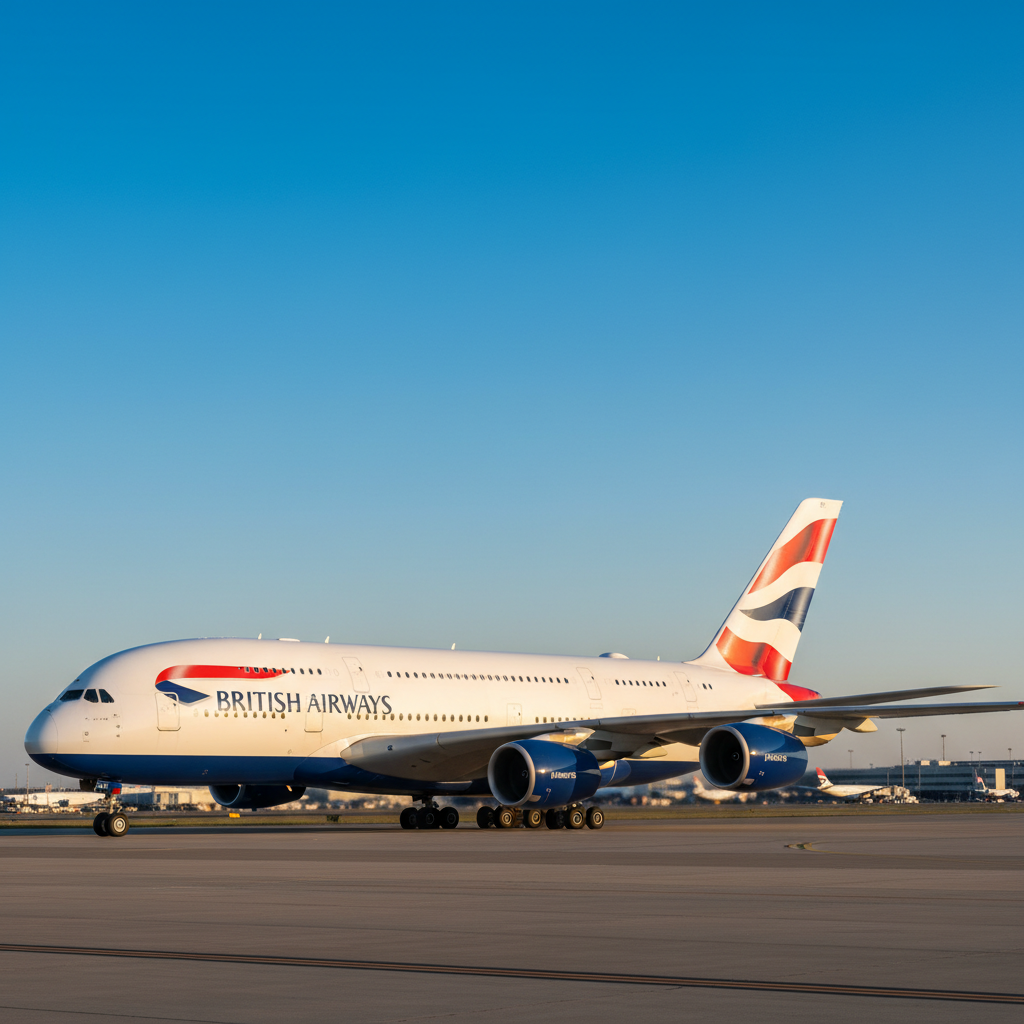
Airlines spend more on uniforms than you might expect, and the results range from forgettable to genuinely striking. British Airways has consistently landed in the latter category. Over the decades, BA has treated its crew uniforms as a brand statement — a way of communicating something specific about who British Airways is and what kind of experience passengers can expect. The story of how BA’s uniforms became something people actually notice is worth examining, because it’s about much more than clothes.
The Design Legacy
British Airways has worked with some of the most prominent names in British fashion across its history. The relationship with Julien Macdonald in the early 2000s, and more recently the 2023 partnership with Ozwald Boateng — the first Black British designer to have a bespoke shop on Savile Row — represent a consistent approach: commissioning designers who are genuinely significant rather than simply recognizable.
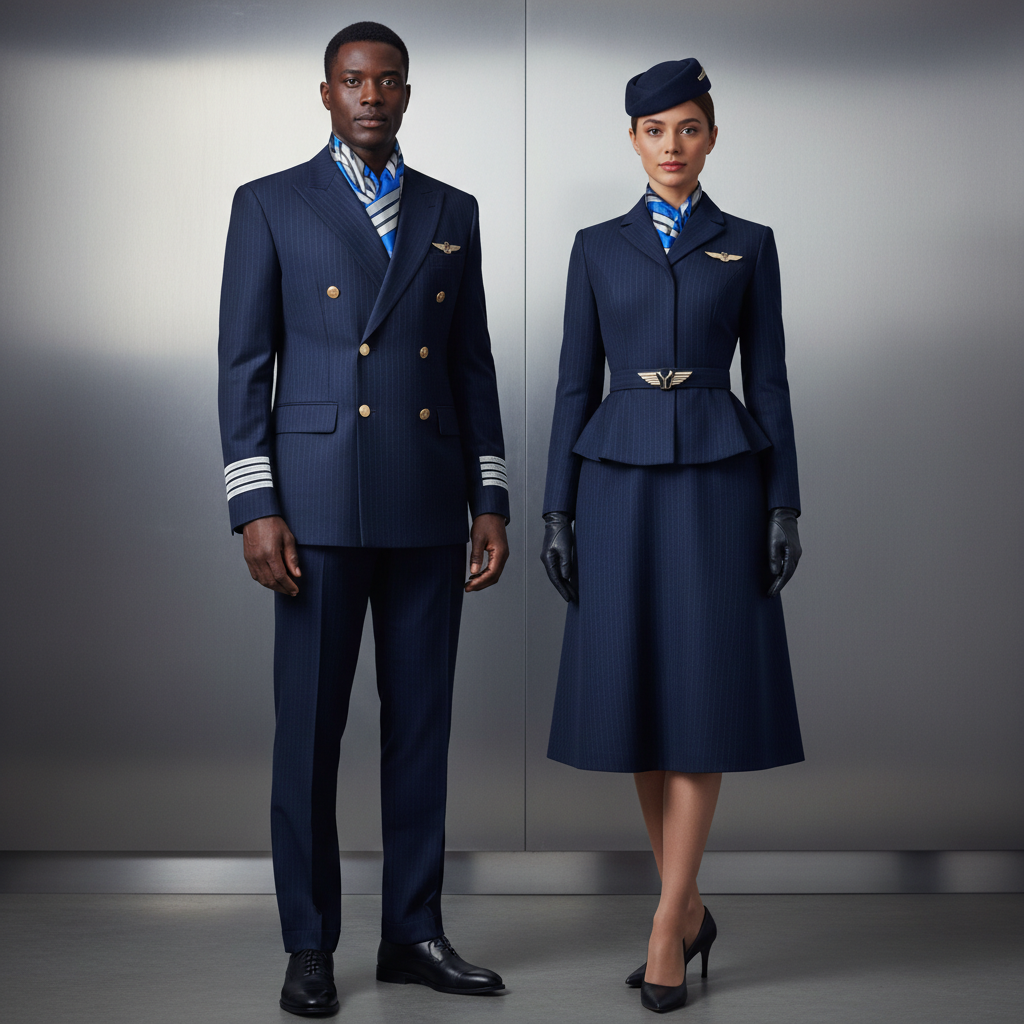
Boateng’s BA uniform collection, introduced in 2023, features uniforms for approximately 30,000 staff — cabin crew, ground crew, and pilots — in a coordinated palette of midnight blue and peacock teal. The women’s jacket incorporates a subtle herringbone pattern visible only in certain lighting, a detail Boateng calls “invisible luxury.” The men’s collection draws on Savile Row tailoring principles while incorporating the practical requirements of a working uniform: breathable fabrics, construction that holds its shape during 14-hour shifts.
Why Uniform Design Matters at Altitude
Airline uniforms function in a uniquely demanding environment. The fabrics need to look professional and sharp in an airport terminal, maintain that appearance across the duration of a long-haul flight (during which the wearer may work continuously for eight to twelve hours), be comfortable enough to allow full range of motion for safety-critical tasks, and launder well enough to maintain appearance across hundreds of wash cycles.
British Airways’ uniform specification documents indicate requirements for specific tensile strength, colorfastness ratings, and thermal regulation properties. The cabin environment alternates between the cold of boarding on a winter morning and the warm, low-humidity environment inside the aircraft. Fabrics that feel comfortable in one environment often perform poorly in the other. Getting both right is genuinely hard.
The Brand Signal
When you board a British Airways flight, the uniforms are doing something specific to your perception of the experience. They signal professionalism, British heritage, and a certain category of quality. BA competes with airlines — Emirates, Singapore Airlines, Cathay Pacific — whose service reputations are built partly on presentation. The uniform is the first touchpoint before any service interaction occurs. It sets an expectation.
Research on airline passenger experience consistently finds that visual cues — how professional the crew looks — significantly influence satisfaction ratings even when service delivery itself is held constant. A crew in well-designed, well-fitted uniforms receives higher satisfaction ratings than the same service delivered by a crew in worn, ill-fitting uniforms. Airlines that understand this invest in uniform quality not as vanity but as a measurable service differentiator. I’m apparently one of the few people who finds the behavioral research more interesting than the fashion coverage.
The Status Dimension at 35,000 Feet
British Airways operates at a peculiar position in the aviation market: a full-service carrier competing with Middle Eastern and Asian mega-carriers for premium passengers while also serving the budget-sensitive transatlantic leisure market. The uniform strategy addresses this by maintaining a visual identity that reads as premium without requiring the extravagance that Emirates can afford.
The Boateng uniform collection was notably well-received by BA staff, which matters more than it might appear. Frustrated by workwear that makes them feel like they’re in a poorly designed costume, flight attendants who feel good in their uniforms perform differently — a finding consistent across hospitality research. When BA’s design partner creates uniforms staff are proud to wear, the airline benefits beyond the visual impact on passengers.
The Competitive Landscape
Singapore Airlines’ uniform, designed in collaboration with Pierre Balmain since 1968, is arguably the most iconic in commercial aviation. The Singapore Girl silhouette is one of the most recognized images in airline marketing globally. British Airways sits in interesting company. Unlike Singapore Airlines, it doesn’t have a single iconic image to anchor its brand — it has a long and varied visual history that reflects decades of corporate evolution.
In an industry where differentiation at 35,000 feet is increasingly difficult — where the aircraft, the food, and even the entertainment systems converge toward similar quality levels — the uniform remains one of the few genuinely differentiating tools airlines have. British Airways has understood this consistently. That understanding shows in the quality of the result.


Stay in the loop
Get the latest flighttechtrends updates delivered to your inbox.