
Today, I will share it all with you.
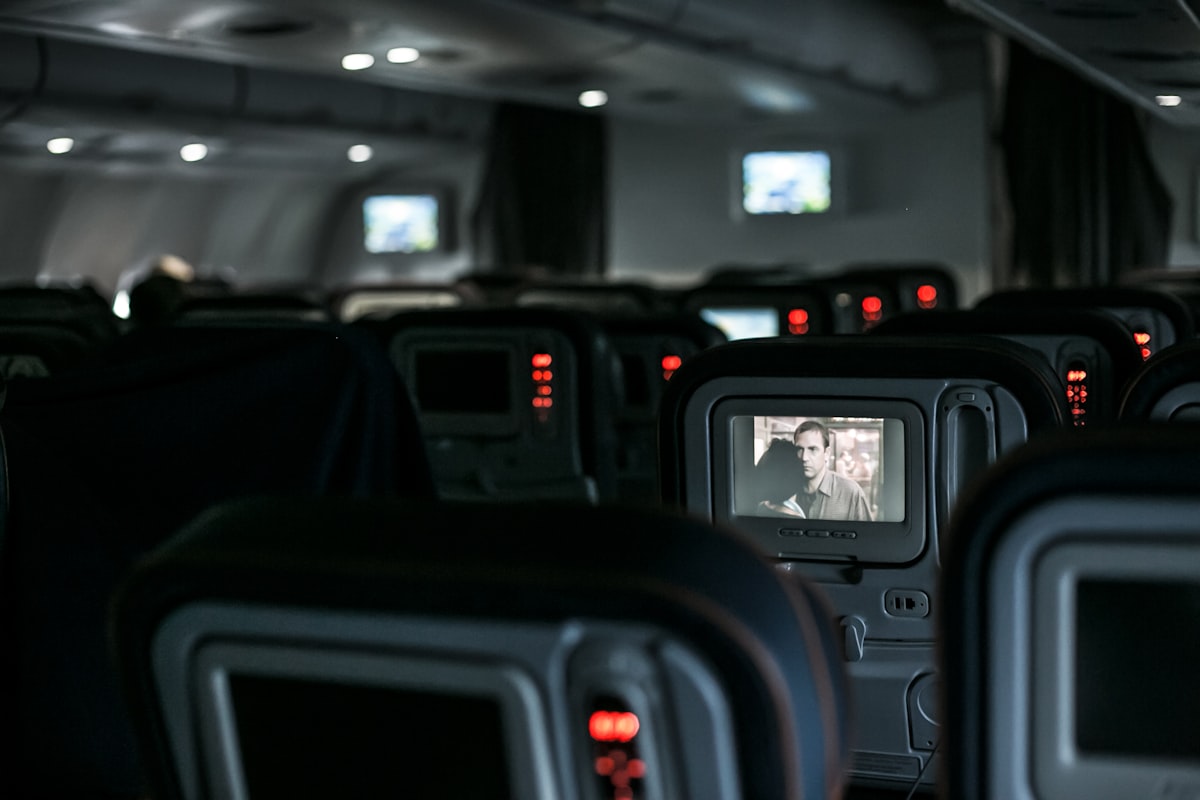
The in-flight entertainment and connectivity (IFEC) space has changed dramatically in the last few years. What used to be a crummy shared screen on the bulkhead playing whatever movie the airline picked is now basically a personal media center at every seat. Here’s what’s actually happening in the industry right now.
WiFi That Actually Works Now
The biggest shift is that airline WiFi doesn’t completely suck anymore. Companies like Gogo and Inmarsat are rolling out satellite-based systems that deliver speeds passengers can actually use — not just load a text email after 45 seconds of watching a spinner.
Airlines are investing serious money in satellite technology and air-to-ground networks. The newer systems let you stream video, hop on video calls, and do real work at 35,000 feet. I was on a Delta flight last month where I streamed an entire movie off Netflix. Two years ago that would have been science fiction on most domestic flights.
Your Phone Is the Remote Now
More airlines are ditching the idea that you need their hardware to watch stuff. Instead, they’re building apps that turn your own phone or tablet into the entertainment system. You download the airline app before boarding, connect to the onboard server, and suddenly you’ve got movies, music, and games on the device you already know how to use.
Less hardware means less weight, less weight means less fuel, less fuel means… well, probably the same ticket price, but at least the airline saves money.
They Know What You Want to Watch
Airlines are getting smarter about content recommendations. Data analytics helps them figure out what movies and shows different passengers actually want to see based on travel history and preferences. It’s basically the Netflix algorithm but at altitude.
This personalization also opens up advertising revenue — targeted ads based on passenger demographics and destination. Whether that’s a good thing depends on how you feel about being marketed to while trapped in a metal tube at 500 mph.
VR and AR Experiments
Some carriers are experimenting with virtual reality headsets and augmented reality features — virtual destination tours, immersive movie experiences, that kind of thing. I tried a VR headset on a Singapore Airlines demo flight once. It was cool for about 15 minutes, then I got motion sick because my eyes said I was standing in a virtual forest while my inner ear said I was in a vibrating aluminum tube. Still early days for this one.
Better Screens and Sound
The physical hardware keeps improving too. Newer aircraft come with larger, higher-resolution displays. Some airlines are moving to OLED screens that look genuinely sharp and save energy. Noise-cancelling headphones are becoming more common in premium cabins, which makes a huge difference when you’re trying to hear dialogue over engine noise.
Connectivity Beyond Netflix
In-flight connectivity isn’t just about watching stuff anymore. Airlines are using connected systems for cabin management — smarter lighting, better temperature control, integrated seat adjustments. Some are exploring real-time health monitoring and predictive maintenance, where the airplane essentially tells ground crews what needs fixing before it lands.
The Green Angle
With sustainability pressure building across the industry, airlines are looking at IFEC through an environmental lens too. Lighter hardware, more energy-efficient systems, and thinking about the full lifecycle of the tech they install. Every pound matters when you’re burning jet fuel, so even shaving weight from entertainment systems adds up across a fleet.
The bottom line is that what happens on your seatback screen — or your own device — is getting dramatically better. Whether that translates to flights feeling shorter or just gives you one more thing to argue about on Twitter is up to you.




Stay in the loop
Get the latest flighttechtrends updates delivered to your inbox.