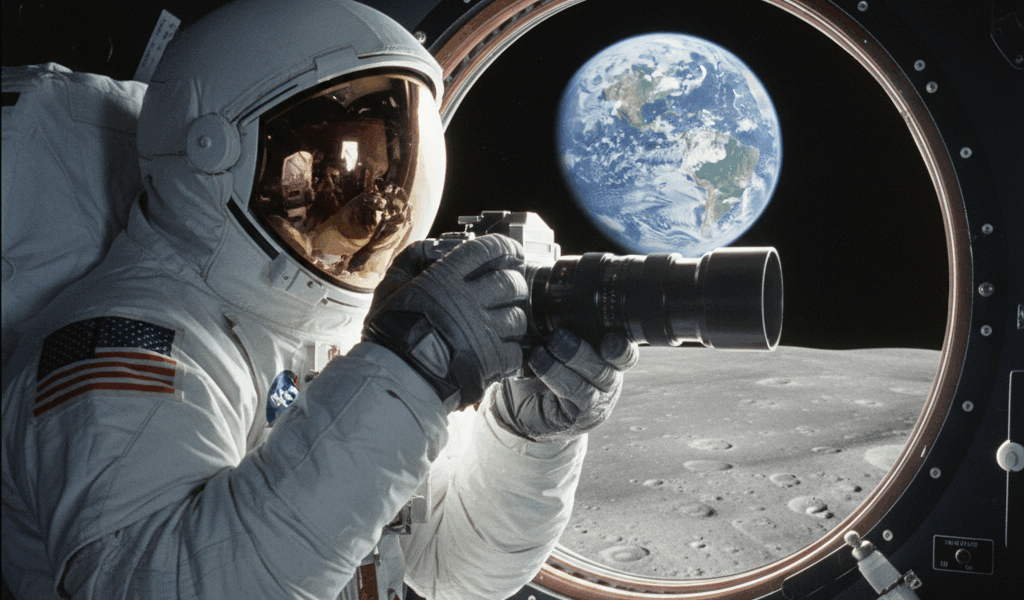
As someone who’s spent years studying both spaceflight history and photography, I’ve learned everything there is to know about why Earthrise genuinely earns that title — and what makes the story of the man who took it even more remarkable than the photo itself. Today, I’ll share it all with you.
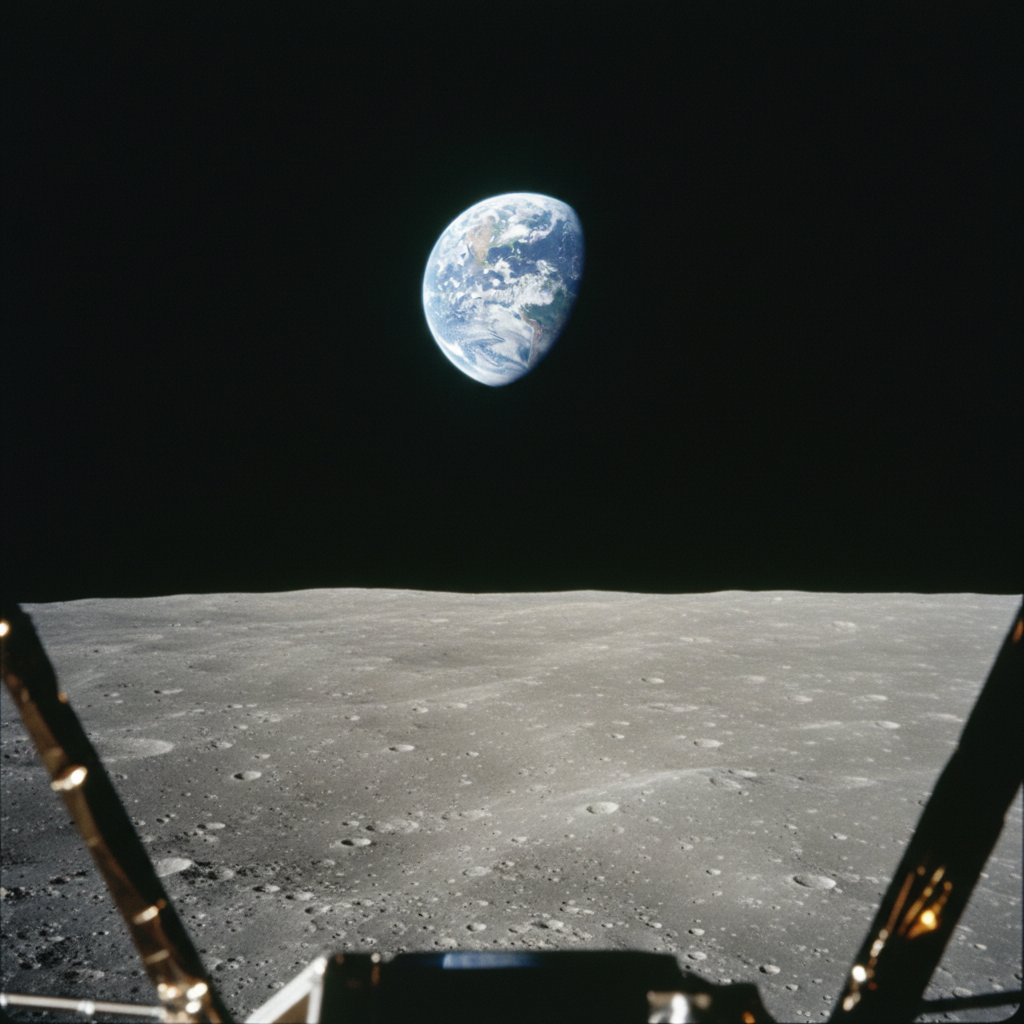
On December 24, 1968, astronaut William Anders pointed a modified Hasselblad camera toward the lunar horizon and pressed the shutter. The resulting photograph — Earth rising above the gray lunar surface against black space — would become one of the most reproduced images in history. Anders called it “Earthrise.” Many credit it with launching the modern environmental movement. And yet Anders spent decades downplaying his role, deflecting credit to the mission and his crewmates. That humility, more than the photograph, defines who Bill Anders actually was.
The Man Before the Photo
William Alison Anders was born on October 17, 1933, in Hong Kong, where his father was a U.S. Navy officer. He graduated from the Naval Academy in 1955, transferred to the Air Force, and flew interceptor aircraft before being selected for the NASA astronaut corps in 1963 as part of the third group — a class that included Buzz Aldrin, Dave Scott, and Michael Collins.
I’m apparently one of the few people who finds the pre-fame Anders more interesting than the famous one. By the standards of his cohort, he was methodical and precise rather than flashy — an engineer’s astronaut. Before Apollo 8, he spent years working on spacecraft systems, particularly life support and environmental controls. He knew the Apollo spacecraft inside out, which is partly why Frank Borman wanted him on what would become one of the most audacious missions in spaceflight history.
Apollo 8 wasn’t supposed to go to the Moon. The original plan called for a second Earth-orbital test flight. But problems with the Lunar Module timeline and intelligence suggesting the Soviets might attempt a lunar flyby pushed NASA to accelerate. Apollo 8 would fly to the Moon with the Command Module alone, three crew, and minimal margin for error.
Apollo 8: The Gamble
Apollo 8 launched December 21, 1968 — only the second crewed flight of the Saturn V rocket. The first, Apollo 7, had only gone to low Earth orbit. Now Borman, Lovell, and Anders were going to leave Earth’s gravity entirely, travel 240,000 miles, orbit the Moon ten times, and come home. Anders was responsible for photography and systematic observation of the lunar surface, scouting potential landing sites for future missions.
The crew had been photographing the Moon mechanically, working through the mission plan, when Borman rolled the spacecraft for a course correction. Anders looked out the window and saw Earth rising above the lunar horizon. “Oh my God, look at that picture over there!” he said on the flight recorder. “Here’s the Earth coming up. Wow, is that pretty.” He grabbed a camera loaded with black-and-white film. Lovell, noting the color camera was closer, grabbed it. Anders reloaded with color film and shot the image that would define the mission.
“We came to explore the Moon,” Anders would later say, “and we discovered the Earth.”
The Photograph’s Impact
Anders wasn’t assigned to photograph Earth. He was documenting the Moon. The image that changed how billions of people thought about their planet was grabbed in maybe thirty seconds of recognition and reflex. Earthrise appeared on the cover of Time, Life, and dozens of major publications within weeks. It made visceral what scientists had been saying in abstract: Earth is a single, bounded object in space, not an infinite backdrop for human activity.
The photograph’s publication coincided with growing environmental consciousness in America. The Clean Air Act passed in 1970. The EPA formed in 1970. The first Earth Day was held in April 1970. Whether Earthrise was the cause or simply part of the moment is debatable, but the timing and impact are real.
Life After Apollo
Frustrated by a space program that was winding down faster than it had wound up, Anders left NASA in 1969 and never flew in space again. He joined the Atomic Energy Commission, later the Nuclear Regulatory Commission, served as U.S. Ambassador to Norway under President Ford, and eventually became a senior executive at General Dynamics. His post-NASA career was successful by any measure.
He remained thoughtful about the photograph’s meaning without becoming precious about it. In interviews over the decades, he consistently pointed out that the crew of Apollo 8 had not intended to photograph Earth at all — they were focused on the Moon. Earthrise was an accident of timing, angle, and a quickly grabbed camera. That it mattered so much while so many deliberately planned efforts fall flat is one of those lessons history keeps teaching.
A Legacy Written in Light
William Anders died on June 7, 2024, when the vintage T-34 Mentor he was piloting crashed into the water near the San Juan Islands in Washington State. He was 90. Fitting, in a way, that an aviator with 6,000+ hours of flight time died in an airplane he loved.
The aviation and space communities mourned a figure who had done something genuinely rare: taken an accidental photograph that changed how billions of people thought about their planet. Not bad for a man who spent his whole career insisting he was just doing his job. When you look at Earthrise today — that fragile blue marble suspended in black — you’re looking at what Bill Anders was trying so hard not to take credit for. The photo is better for it. So is the story.



Stay in the loop
Get the latest flighttechtrends updates delivered to your inbox.