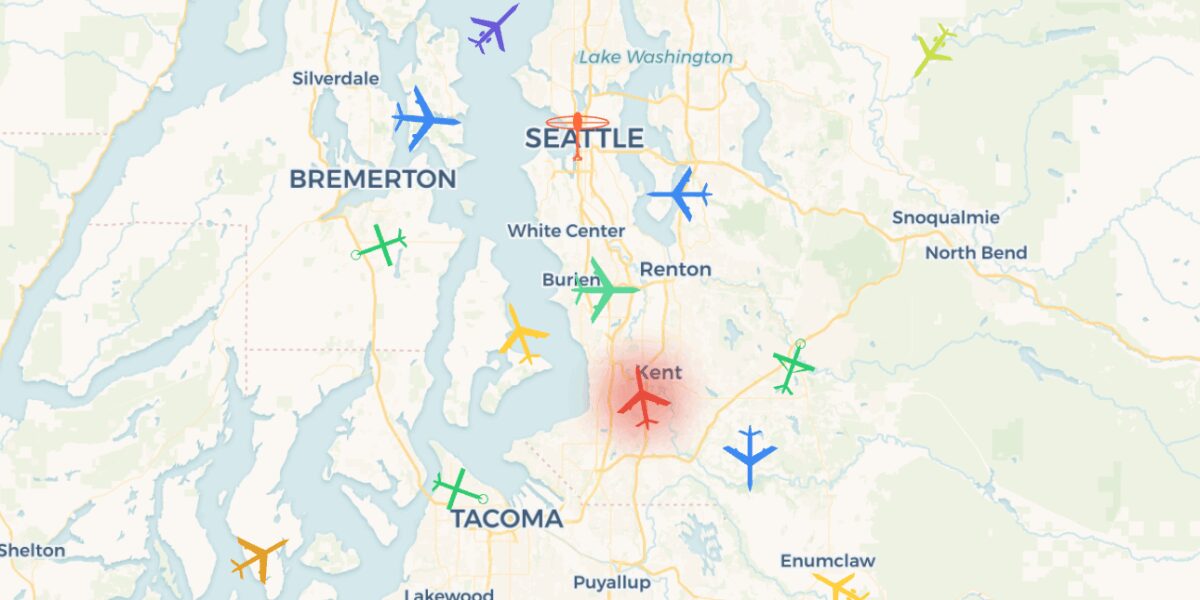
 LIVE FLIGHT TRACKERADSB Tracker LiveReal-time ADS-B data from open-source receivers worldwide. Free, no subscription paywalls.Download for iPhoneGet it on Google Play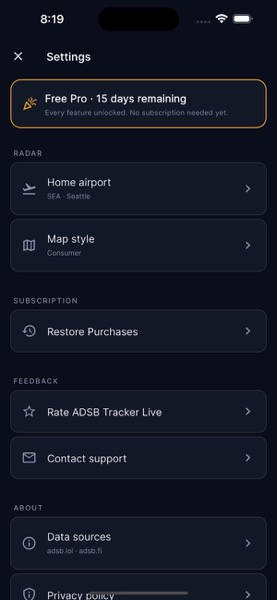
ADS-B Out — Automatic Dependent Surveillance-Broadcast — became the de facto position-broadcast standard for US aviation when the 2020 mandate required equipage for most aircraft operating in controlled airspace. Six years in, the technology has settled into a mature operational rhythm. Most aircraft in US airspace broadcast position continuously. A vast network of ground-based receivers picks up those broadcasts. Satellite-based receivers (Aireon) fill the oceanic gaps. Public APIs aggregate the data.
For aviation enthusiasts, professional pilots, and the broader industry watching how airspace infrastructure evolves, ADS-B is one of the more interesting infrastructure stories of the past decade. Here’s the current state in 2026 and how the data flows through the consumer-tracker apps.
The ADS-B Out Mandate Reach
Under FAR 91.225 and 91.227, ADS-B Out equipage has been required since January 1, 2020 for:
- Class A, B, and C airspace
- Within 30 nautical miles of Class B primary airport (the “Mode C veil”)
- Class E airspace at or above 10,000 feet MSL
- Class E airspace over the Gulf of Mexico above 3,000 feet
The mandate covered nearly all commercial, business, and most general aviation aircraft. Exceptions remained for certain antique aircraft, balloons, gliders without electrical systems, and military aircraft with classified missions.
By 2026, equipage is essentially universal among civilian aircraft operating in controlled airspace. The exceptions are operationally rare. Visual flight in uncontrolled airspace doesn’t require equipage but most aircraft are equipped anyway.
The Receiver Network That Made Public Tracking Possible
The infrastructure that turned ADS-B Out from “ATC surveillance source” into “public flight tracking” was the community receiver network. ADS-B receivers cost roughly $20 in basic form ($100-200 for professional units). A receiver plus an antenna with line-of-sight to the sky can capture broadcasts from aircraft within ~250 miles.
Several major receiver networks aggregate community-contributed data:
ADS-B Exchange — community-driven, no filtering of military or sensitive flights, raw data API access. Most popular for research and unfiltered tracking.
adsb.fi — European-led network with global receiver presence. Open data, similar policy to ADS-B Exchange.
adsb.lol — newer open-data network, community-focused.
Flightradar24 and FlightAware — commercial networks. They operate their own receivers and partner with community contributors. They filter certain flights (military, government sensitive) at government request.
The community networks vs. commercial networks distinction is the main reason serious aviation enthusiasts or researchers might prefer one. For routine flight tracking, commercial networks have polished UIs and flight-schedule integration. For unfiltered military and sensitive tracking, only community networks deliver.
Satellite ADS-B — Aireon Coverage
Until 2018, oceanic flights were essentially invisible to ground-based ADS-B because the receivers can’t see beyond line-of-sight. The Iridium NEXT satellite constellation, completed in 2019, hosts ADS-B receivers in space, providing 100% global coverage including oceanic regions.
Aireon (the company operating the satellite ADS-B service) makes the data available to air navigation service providers globally. Some commercial trackers integrate Aireon data for oceanic coverage. Community networks have less reliable access.
For aviation enthusiasts tracking transatlantic and transpacific flights, Aireon coverage is what made continuous tracking possible. Before 2019, an aircraft flying KJFK to EGLL would disappear about 200 miles east of Newfoundland and reappear about 200 miles west of Ireland. Now coverage is continuous.
What ADS-B Out Actually Broadcasts
The broadcast packet contains:
- ICAO 24-bit address (unique aircraft identifier)
- Aircraft identification (callsign — often the same as flight number for commercial flights)
- Position (GPS-derived latitude, longitude, and altitude)
- Velocity (ground speed, track, and vertical rate)
- Surveillance status
- Capability codes
- Squawk code (transponder code from ATC)
- Special status indicators (emergency, lost-comm, etc.)
The broadcast refreshes once or twice per second from aircraft with ADS-B Out installed.
Notably absent: passenger information, fuel state, flight plan details, crew identification, or anything proprietary. The flight-schedule data that commercial trackers show comes from combining ADS-B data with airline schedule databases — not from the ADS-B broadcast itself.
The Privacy Conversation
The ease of public tracking has generated significant aviation-industry conversation about privacy, particularly for business jets and high-profile aircraft owners.
The FAA’s Limiting Aircraft Data Displayed (LADD) program allows registered aircraft owners to request suppression on commercial trackers. Most commercial networks honor LADD. Community-data networks don’t.
The FAA also introduced the Privacy ICAO Address program — aircraft can be issued alternate ICAO addresses to break the link between broadcast and registration. Adoption is limited but growing in the business aviation segment.
For commercial aviation, the privacy conversation is less active because flight numbers and routes are already publicly disclosed in scheduling. For business and general aviation, the tension between ADS-B’s safety benefits and the privacy implications of universal tracking remains an industry topic.
LIVE FLIGHT TRACKERADSB Tracker LiveTrack aircraft from open data sourcesDownload for iPhoneGet it on Google PlayThe Mobile App Landscape
Several ADS-B-based flight trackers exist, with different trade-offs:
Flightradar24 — market leader. Polished interface, comprehensive flight-schedule integration. Free tier limited; paid tier $40-50/year. Filters sensitive flights.
FlightAware — US-focused with professional features. Strong for ATC-style information and flight plan display. Free for casual use, paid for advanced.
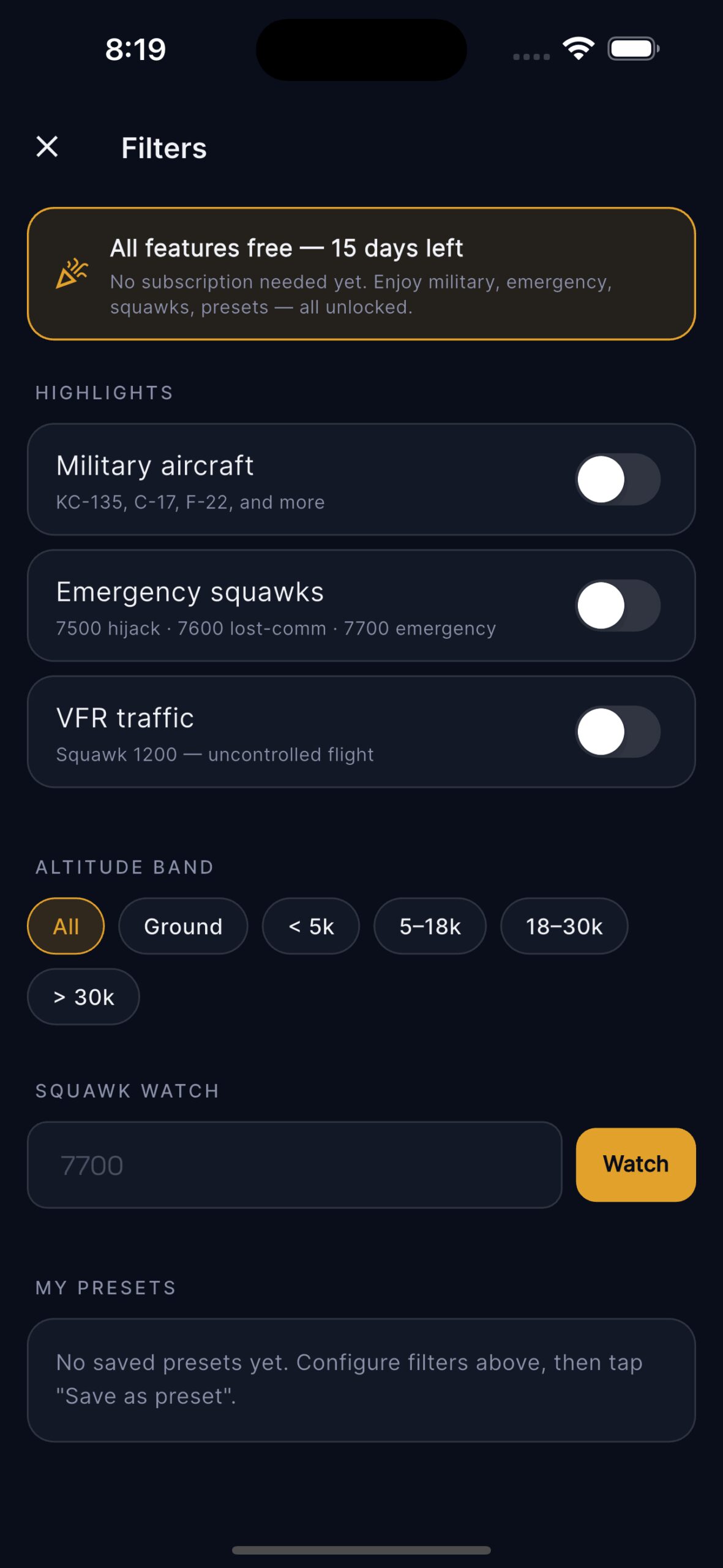
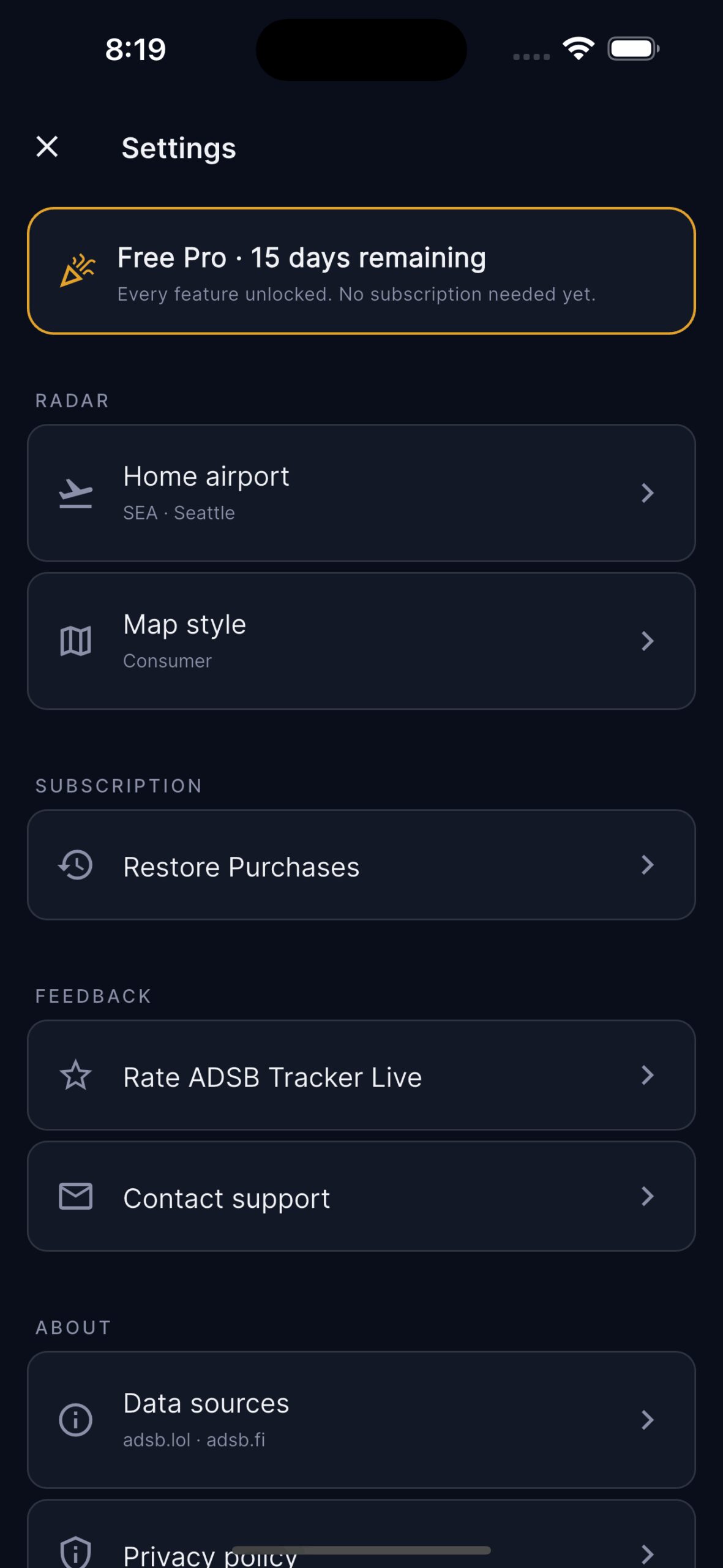
ADSB Tracker Live — community-data feed. Free with no paywall. Unfiltered. Best for users who want raw data access and don’t need schedule polish.
RadarBox — similar feature set to Flightradar24, slightly different polish.
OpenADSB — open-source web tracker, no native mobile app but mobile-responsive site.
For aviation professionals and serious enthusiasts, the practical choice is often “both” — a commercial tracker for flight-schedule context and a community-data tracker for unfiltered data access. The combined cost is one subscription; the community tracker is free.
Pilot Use Cases
Pilots use ADS-B data in operational contexts:
Pre-flight traffic check. See what’s in the airspace near your departure airport before launching. Useful for VFR pilots flying into busy airspace.
En-route situational awareness. Many cockpit Garmin and Avidyne avionics integrate ADS-B In (the receive side), showing nearby traffic on multi-function displays. The mobile apps duplicate this on the phone — useful as a cross-reference or for student pilots without ADS-B In equipage.
Post-flight track review. Compare your actual track to your planned route. Useful for training pilots evaluating their GPS direct accuracy, holding entry geometry, and approach precision.
Conflict resolution research. When ATC vectors you off course, post-flight tracking shows you whether the deviation was substantial and what other traffic was nearby.
Aviation Enthusiast Use Cases
For non-pilots interested in aviation:
Aircraft spotting. Real-time view of what’s flying overhead. Combined with phone GPS, “look up at the sky → see what’s there” becomes a 5-second answer.
Specific aircraft tracking. Following warbirds, vintage aircraft, prototype aircraft, government aircraft, or specific airline equipment.
Route research. Understanding actual traffic flows at major airports — where aircraft enter, what arrival patterns are, how holds are stacked during weather events.
Educational use. Aviation training programs use real ADS-B data to teach traffic patterns, separation standards, and ATC workflows in operational context.
Where ADS-B Coverage Doesn’t Reach
Despite global coverage via satellite ADS-B, some operational gaps remain:
Below ADS-B Out altitude requirements. Aircraft operating in uncontrolled Class G airspace below 10,000 feet aren’t required to have ADS-B Out. Some general aviation flights remain invisible to the network.
Aircraft with disabled or malfunctioning ADS-B. Equipment failures happen. An aircraft with non-functional ADS-B Out is invisible to public trackers regardless of where it’s flying.
Conflict zones. Areas where ground-based receiver operators have been displaced or networks have been disrupted. Satellite ADS-B fills these but with potential latency.
Aircraft using Mode S Enhanced Surveillance without ADS-B Out. Some older equipment broadcasts position via different protocols that public trackers don’t decode.
The Direction of Things
A few trends worth noting for 2026 and beyond:
UAS and ADS-B. Larger commercial drones are increasingly carrying ADS-B Out for integration into manned airspace. This puts more aircraft into the network and changes the traffic complexity profile.
Space-based ATC. Air navigation service providers globally are increasingly using ADS-B as their primary surveillance source, replacing or supplementing traditional radar. The data feeding public trackers is the same data controllers see.
Privacy refinement. Expect continued evolution of privacy programs (LADD, PIA) and counter-pressure from public-interest researchers who track sensitive flights.
Integration with cockpit displays. ADS-B In equipage continues to grow, putting traffic information directly into more aircraft.
For the broader aviation tech context including specific app comparisons and pilot use cases, see the ADS-B flight tracker apps comparison.
LIVE FLIGHT TRACKERADSB Tracker LiveADSB Tracker Live— Free Open DataDownload for iPhoneGet it on Google Play



Stay in the loop
Get the latest flighttechtrends updates delivered to your inbox.